
Konark & Chandrabhaga Beach: India's Most Underrated Coastal-Heritage Combo
The Konark Sun Temple is a 13th-century stone chariot built on a Samba-and-Surya legend, with a beach next to it — full history, mythology, and why Odisha's coast is still overlooked.
Ask someone to name a beach state in India and you'll get Goa, maybe Kerala, maybe Gokarna if they're well-traveled. Almost nobody says Odisha — which is strange, because the Konark-Puri coastline pairs one of India's most architecturally significant temples with genuinely good beaches, and gets a fraction of the visitors either category usually pulls on its own.
History
The Konark Sun Temple was built around 1250 CE under King Narasimhadeva I of the Eastern Ganga dynasty, conceived as a colossal stone chariot for the sun god Surya — twelve pairs of ornately carved wheels representing the months and their divisions, seven horses representing the days of the week, the entire structure oriented so the rising sun would once have struck the main sanctum directly. It's one of the most technically ambitious temple projects ever undertaken in India, and UNESCO inscribed it as a World Heritage Site in 1984 in recognition of that ambition. The main tower collapsed sometime before the 19th century — accounts differ on exactly when or why, with theories ranging from structural failure to deliberate damage during regional conflicts — but the surviving assembly hall and its carvings remain intact enough to convey the scale of what was built.
Mythology & Legend
Local tradition holds that the temple's construction was itself an act of penance tied to a specific myth: Samba, a son of Krishna, was cursed with leprosy after a dispute involving the sage Narada. Advised that only worship of Surya, the sun god, could cure him, Samba performed penance at this coastal site and was healed — and in gratitude, built a temple to Surya here. Konark's name itself reflects this devotion: "Kona" (corner/angle) and "Arka" (the sun), referring to its role as a shrine at the edge of the sea dedicated entirely to solar worship.
The temple's wheels aren't just decorative — each one functions as an accurate sundial, and Konark's builders are understood to have used the temple's orientation and wheel-shadow calculations as a genuine timekeeping instrument, not merely a symbolic one.
Chandrabhaga Beach
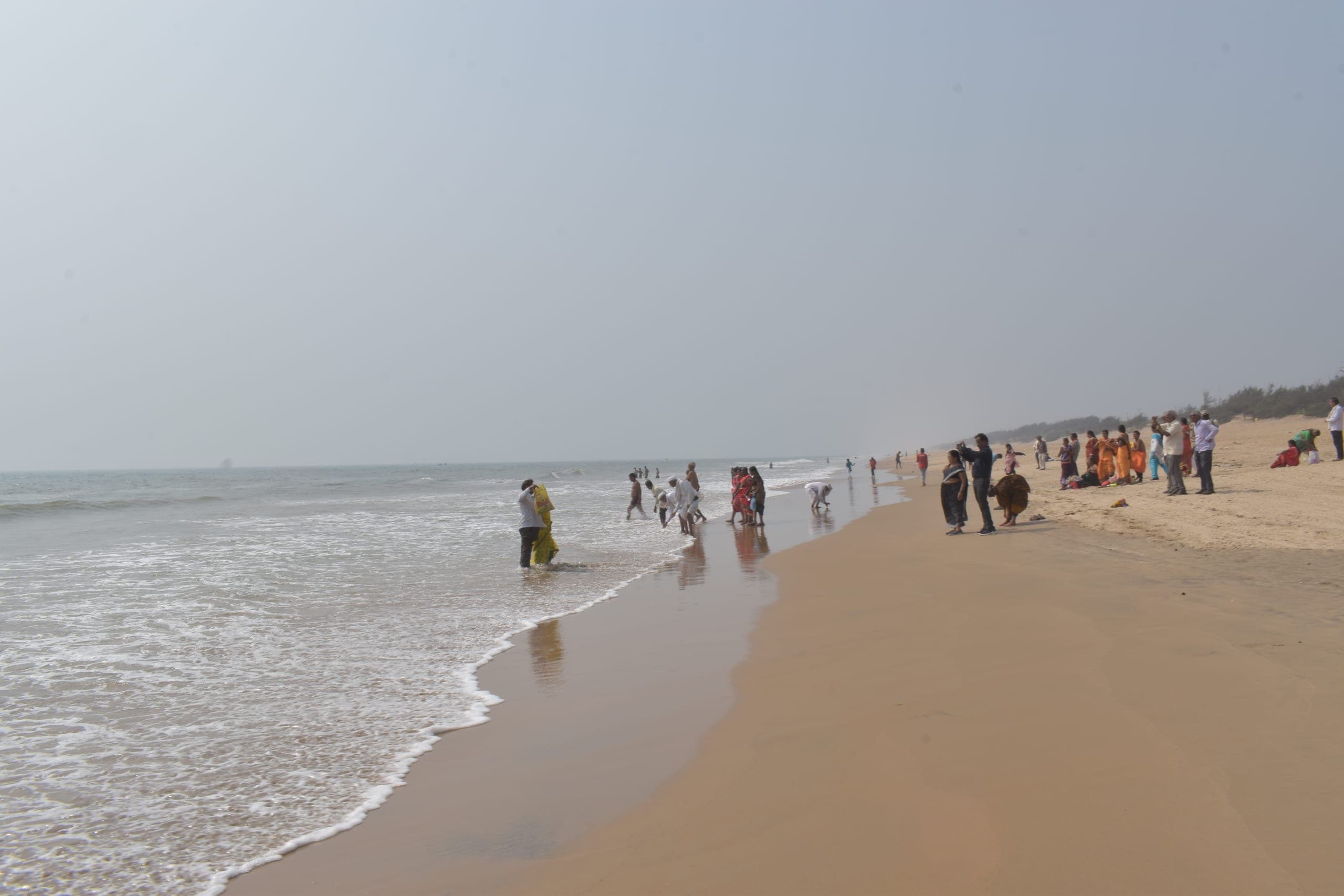
A short drive from the temple, Chandrabhaga Beach marks where the Chandrabhaga river meets the Bay of Bengal. Unlike beaches built around beach-shack tourism, this is a working coastline — fishing boats, wide sand, and at sunrise a striking view back toward the temple silhouette. It's named after the same Chandrabhaga referenced in regional Puranic geography as a sacred confluence point.
The Konark Dance Festival
Every December, the temple grounds host the Konark Dance Festival, a multi-day classical dance event performed against the floodlit backdrop of the temple itself, featuring Odissi — the classical dance form native to Odisha — alongside other Indian classical traditions. The festival has run for decades and has become one of the more significant classical arts events in Eastern India, drawing performers and audiences well beyond the state, timed deliberately to coincide with the cooler, more comfortable winter travel season.
Odisha's classical arts more broadly — Odissi dance, Pattachitra scroll painting, and a distinct temple-carving tradition visible throughout Bhubaneswar's older shrines — form a cultural throughline that connects Konark's carvings to a living artistic practice rather than treating the temple as a purely historical artifact.
Quick Facts
- c. 1250 CE, under King Narasimhadeva I, Eastern Ganga dynasty
- World Heritage Site since 1984
- Designed as a stone chariot — 24 carved wheels, 7 horses
- Built by Samba, son of Krishna, after being cured of leprosy through Surya worship
- The temple's wheels double as working sundials
- October–February
Getting There
Konark sits between Bhubaneswar (the temple city) and Puri (home to the Jagannath Temple), roughly 65 km from Bhubaneswar by road — close enough that all three make sense as a single circuit rather than separate trips.
Our Soul of Odisha trip covers all three: Bhubaneswar's ancient temples and caves, Puri's Jagannath Temple and beach, then Konark's Sun Temple and Chandrabhaga Beach, closing the loop back to Bhubaneswar.
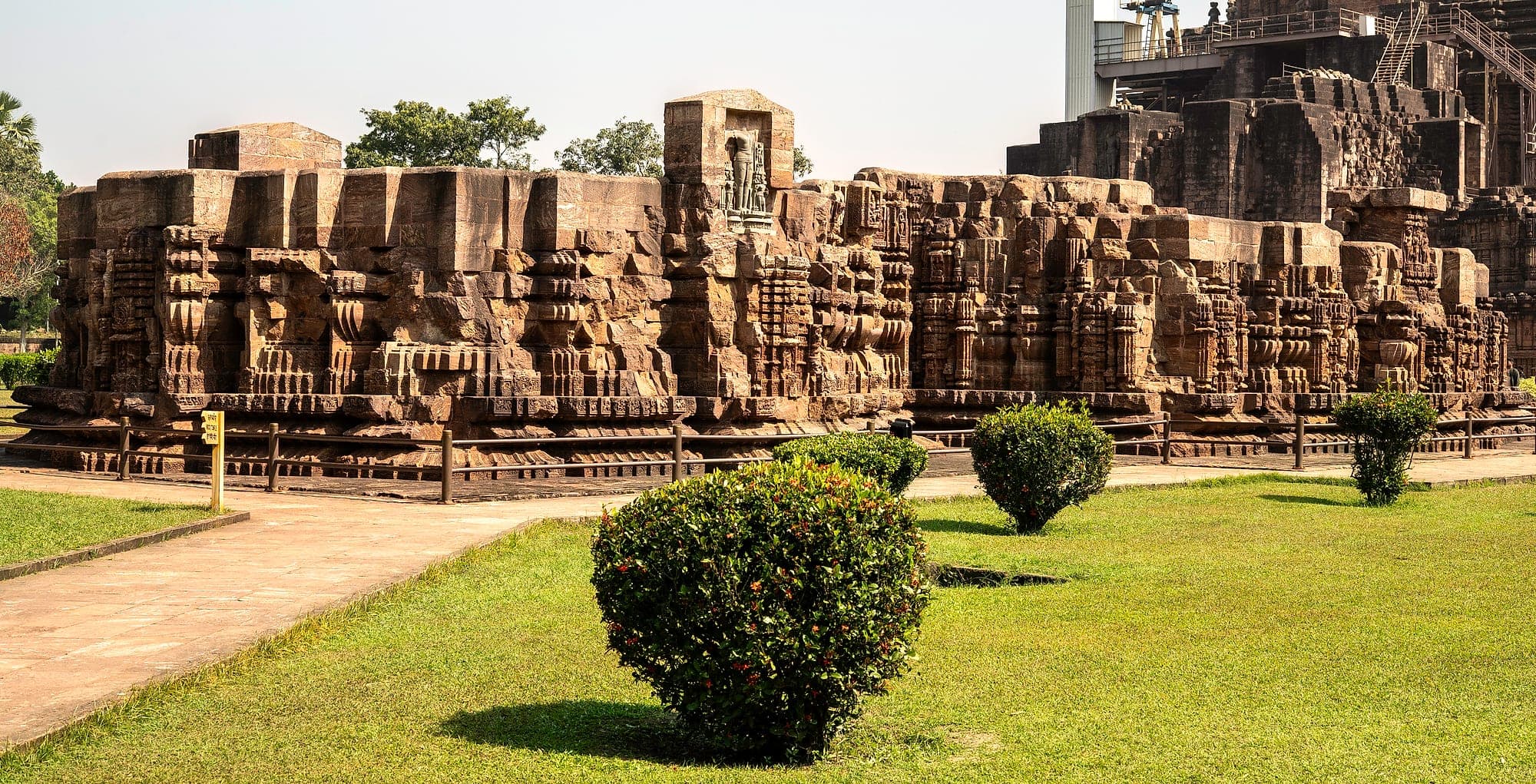
Photo: Joydeep / CC BY-SA 4.0