Ayodhya Beyond Ram Mandir: A Heritage Walk Through Hanuman Garhi and Kanak Bhawan
Ayodhya's Ramayana history goes well beyond Ram Janmabhoomi — Hanuman Garhi's guardian legend, Kanak Bhawan's Kaikeyi gift story, and the Sarayu ghats' role in the epic's ending.
Since the Ram Janmabhoomi Mandir's consecration in January 2024, Ayodhya has understandably become defined by that one temple in most people's minds. It's worth knowing the city carries a much older, more layered set of Ramayana associations than a single-temple visit suggests.
History
Ayodhya's identity as Rama's birthplace and the capital of the Ikshvaku dynasty is recorded across some of Hinduism's oldest texts, with the Ramayana itself — traditionally attributed to the sage Valmiki — describing it as a city of extraordinary prosperity and order under Rama's rule, so much so that "Ram Rajya" (the rule of Rama) became a lasting Indian shorthand for ideal governance. Archaeological and textual scholarship places the city among a small group of ancient settlements referenced continuously across multiple historical periods, though the exact site of the ancient city and its relationship to the present-day town has long been a subject of both religious tradition and, more recently, legal and archaeological dispute — culminating in the Supreme Court's 2019 verdict and the subsequent construction of the current Ram Mandir.
Mythology & Legend
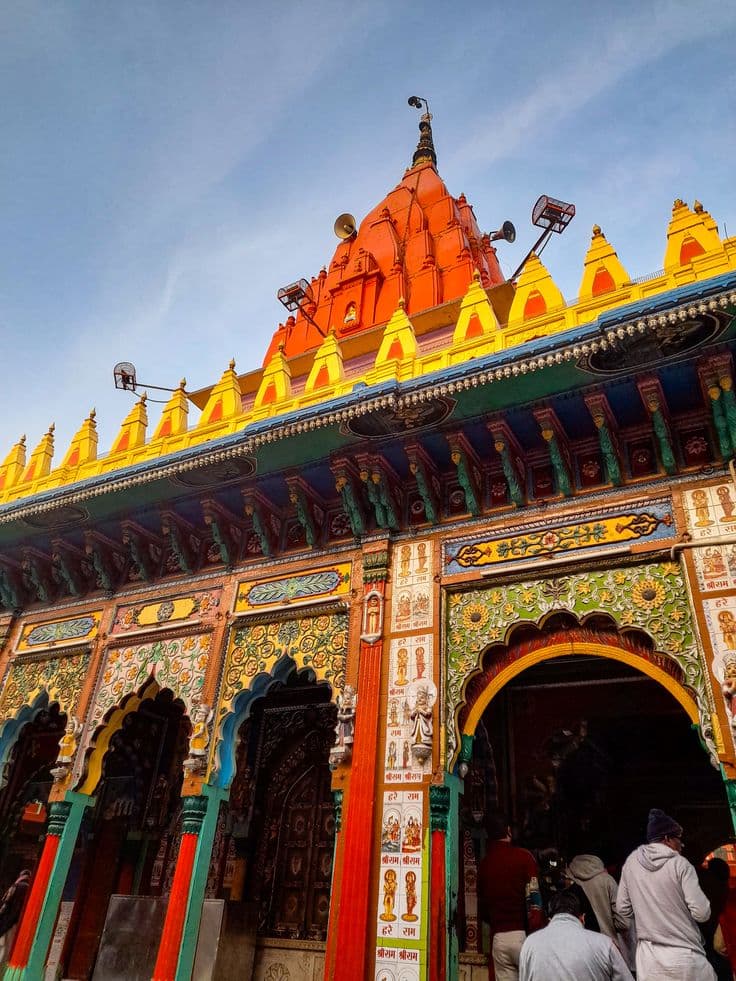
Hanuman Garhi, perched on a small hill and reached by a flight of stone steps, is dedicated to Hanuman and, by local tradition, considered the guardian shrine of the entire city — most pilgrims visit here before Ram Janmabhoomi itself, following a sequence considered proper practice for generations, well before the current temple complex existed in its present form.
Kanak Bhawan, a short walk from Hanuman Garhi, carries a more domestic legend: according to local tradition, the ornate palace-temple was gifted to Sita by her mother-in-law Kaikeyi immediately after her wedding to Rama, as a personal residence — kanak meaning gold, a reference to the building's original gilded ornamentation. The current structure dates to the 19th century, built by the Rani of Tikamgarh, but stands on a site tradition has associated with this gift for far longer.
The Sarayu river, running along the city's edge, holds its own weight in the epic's ending: the Ramayana describes Rama's final act on earth as walking into the Sarayu's waters at Guptar Ghat, returning to his divine form as Vishnu — making the river not just a backdrop to Ayodhya's temples but the site of the epic's own conclusion.
Nageshwarnath and the Older Temples
Away from the main Ram-centric sites, Nageshwarnath Temple — dedicated to Shiva and, by local tradition, established by Rama's son Kush — represents an older devotional layer in the city that predates its current redevelopment by a long margin, and is credited by some local accounts with being the only temple in Ayodhya to have survived every subsequent invasion and demolition across the centuries, largely because of its comparatively modest scale and location away from the city's most contested sites.
Ayodhya's markets, particularly around the older parts of the city, still trade in traditional items tied to pilgrimage practice — prasad, ritual items, and religious texts — a commercial identity that's stayed remarkably consistent even as the city's built environment has changed dramatically around the new temple complex.
Quick Facts
- Ikshvaku — Ayodhya was its capital in the Ramayana
- Considered the city's guardian shrine, traditionally visited before other temples
- Legend holds it was gifted to Sita by Kaikeyi; current structure built 19th century
- Site of Rama's legendary return to his Vishnu form at Guptar Ghat
- January 2024
- October–March
Getting There
Ayodhya makes the most sense paired with the other major pilgrimage towns of the Ganga-Yamuna belt — Vrindavan, Mathura, and Varanasi — rather than visited alone.
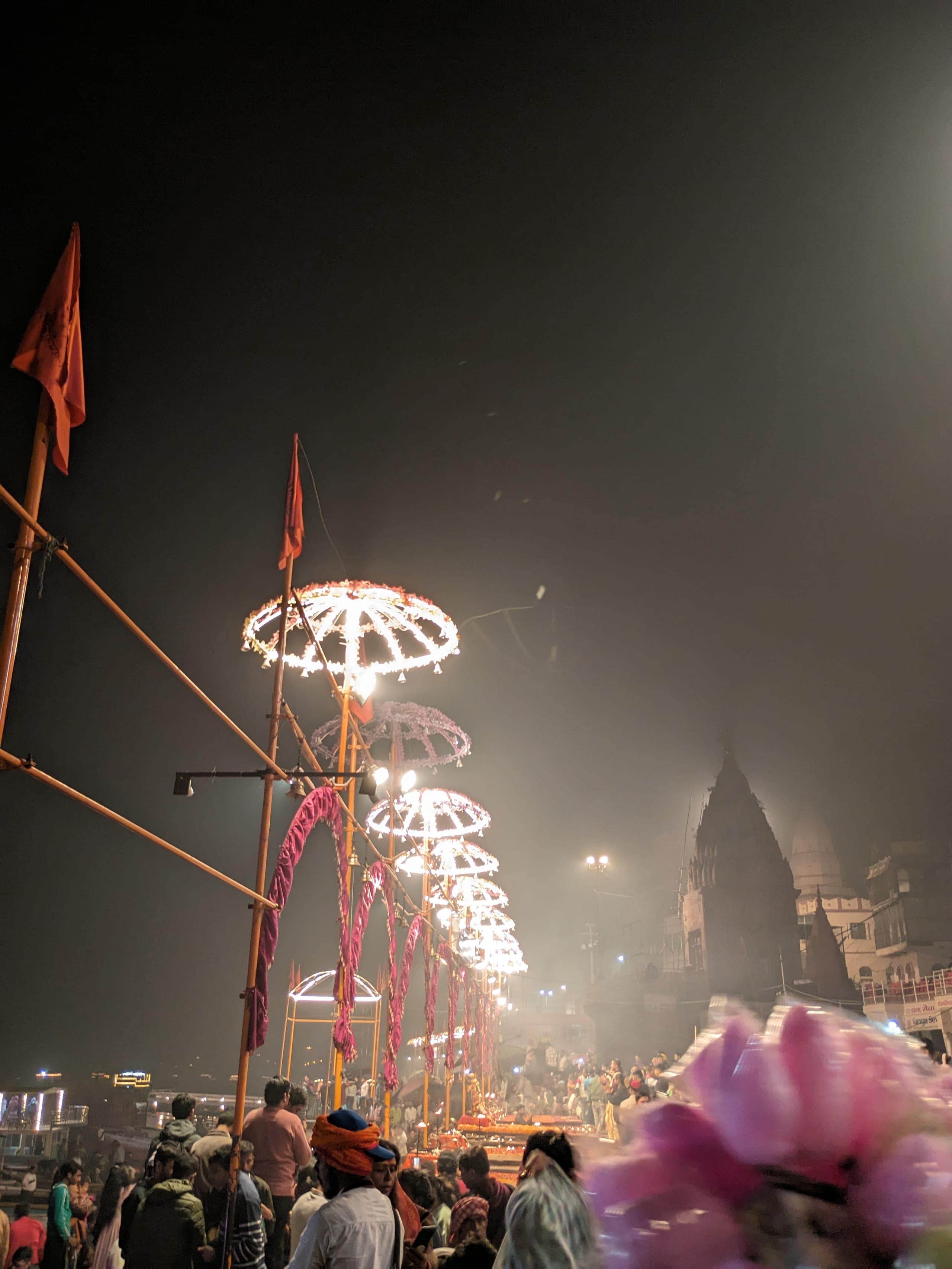
Our Spiritual Heartland trip covers all four: Krishna temples in Vrindavan and Mathura, the ghats and Ganga Aarti in Varanasi, and Ayodhya's full circuit including Hanuman Garhi, Kanak Bhawan, and the Ram Janmabhoomi Mandir, with a stop in Lucknow on the way back.
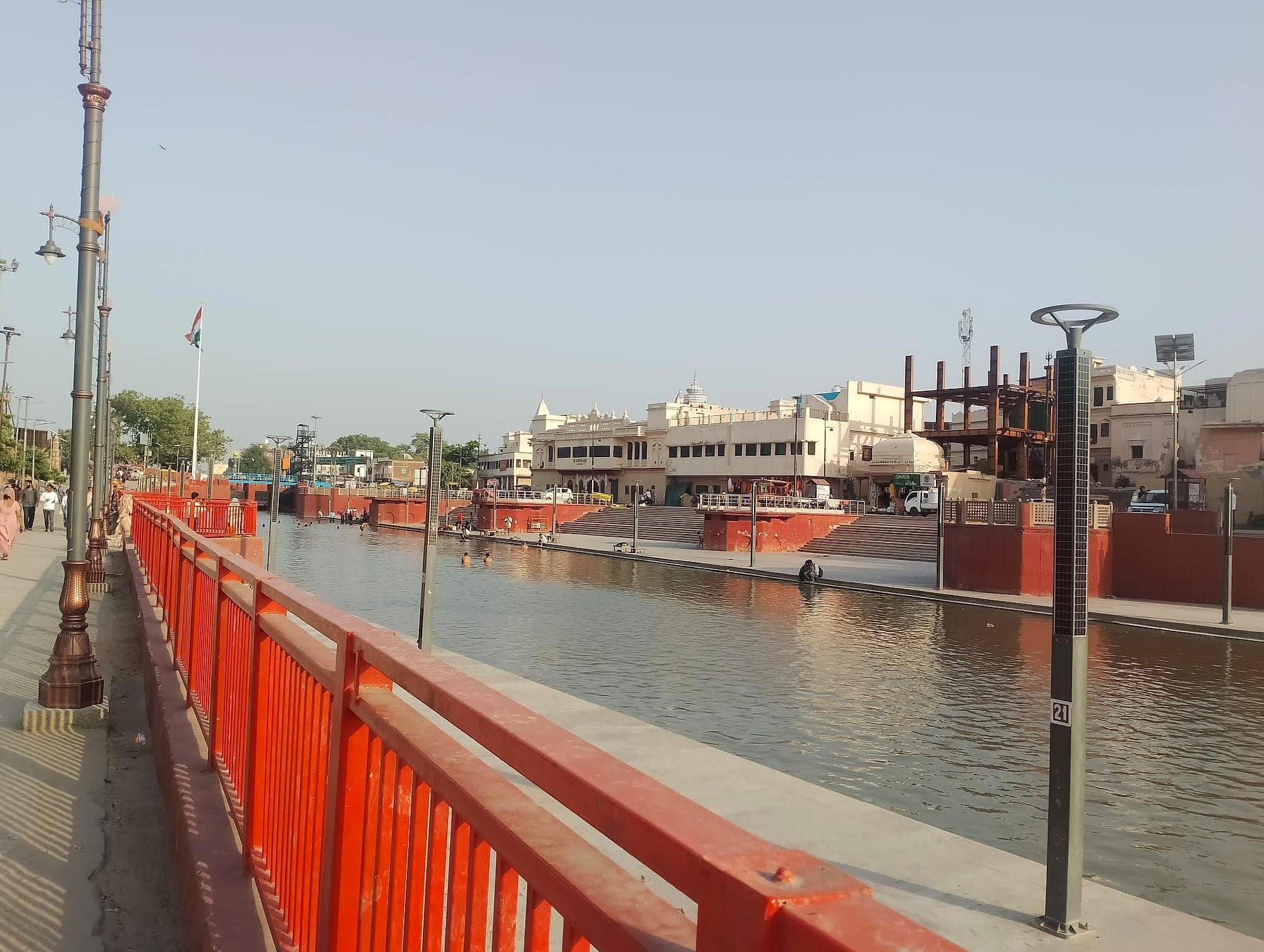
Photo: Vanshiikaa / CC0