Badami & Aihole: The Rock-Cut Temples Hampi's Fame Overshadows
Badami's 6th-century cave temples were carved by the Chalukya dynasty, whose capital this was before Hampi's Vijayanagara Empire even existed — full history, legend, and facts.
Hampi shows up on every Karnataka itinerary, every "ruins to visit before you die" listicle. Badami, two hours away and arguably just as historically consequential, gets a fraction of the footfall — despite being older than Hampi by roughly nine centuries.
History
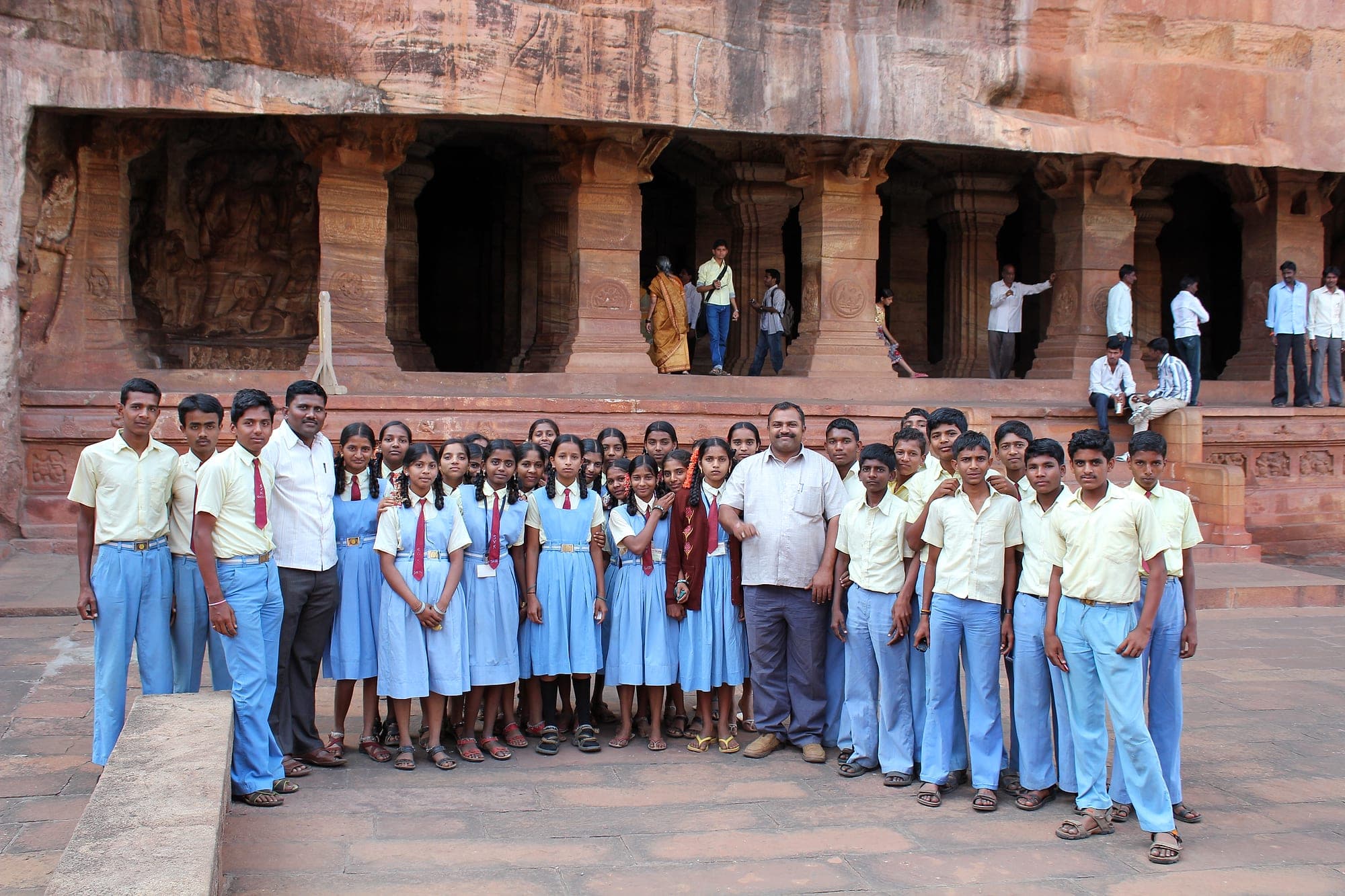
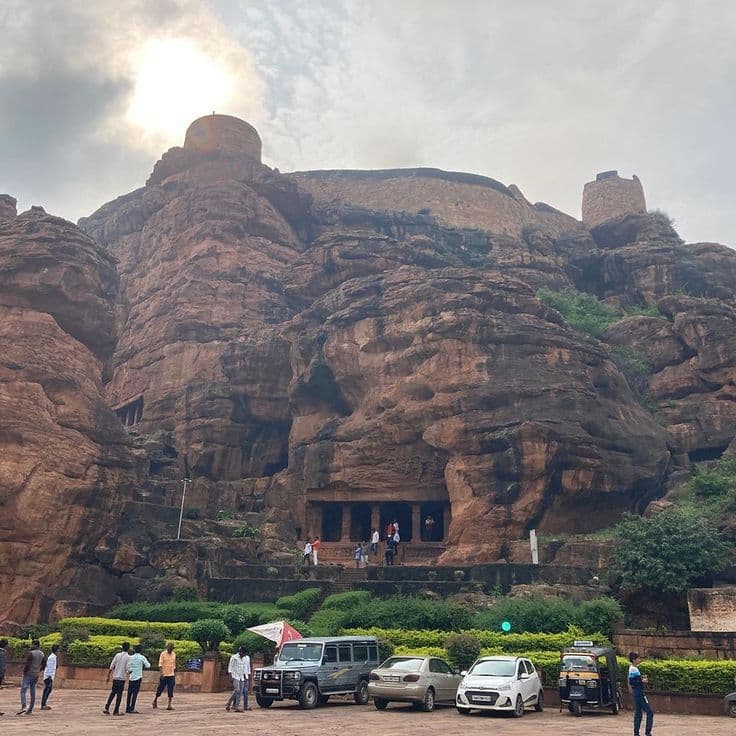
Badami was the capital of the Chalukya dynasty from 543 CE, founded by Pulakeshin I, and it remained the seat of Chalukya power for roughly two hundred years — centuries before the Vijayanagara Empire that built Hampi even existed. The Badami Chalukyas were a major South Indian power in their own right, fighting wars with the Pallavas of Kanchipuram to the south and the northern dynasties of the Deccan, and their architectural experiments here directly shaped South Indian temple design for centuries afterward. The four rock-cut cave temples carved into Badami's sandstone cliff — dedicated to Vishnu, Shiva, and Jain tirthankaras — are dated to the late 6th century and rank among the earliest surviving examples of structural cave temple architecture anywhere in South India.
Legend & Architecture
Cave 3, dedicated to Vishnu and dated by inscription to 578 CE, carries one of the most precisely dated ancient royal inscriptions in Karnataka — a rarity that lets historians anchor much of the wider Chalukya chronology around it. The carvings throughout the caves depict Vishnu's avatars, including a famous panel of Vishnu as Narasimha (the man-lion) and another of Vishnu seated on the coiled serpent Ananta Shesha — standard Puranic imagery, but rendered with a stylistic confidence that marks a genuine artistic transition point between earlier Deccan cave art and the more elaborate structural temples that followed at Aihole and Pattadakal.
Badami's setting is part of its story too: the caves face Agastya Lake, named for the sage Agastya of Vedic and Puranic tradition, said to have performed penance in this region — one more layer of legend stacked onto a site that's already dense with dated political history.
A short drive away, Aihole is sometimes called the "cradle of Indian temple architecture" — over a hundred temples built across several centuries as the Chalukyas experimented with structural forms before settling on the styles that later spread across South India. It's less visually dramatic than Badami's cliff caves but arguably more architecturally significant, and it rarely makes it onto standard tourist routes at all.
Pattadakal, the Third Site
A short distance from both Badami and Aihole, Pattadakal — the third point in what's sometimes called the Chalukya triangle — was the site where Chalukya kings were formally crowned, and it holds its own UNESCO World Heritage status, inscribed in 1987 for a cluster of temples that blend North Indian nagara and South Indian dravida architectural styles side by side, a deliberate stylistic experiment rare enough to be historically significant on its own. Together, Badami, Aihole, and Pattadakal form a more complete picture of the Chalukya dynasty's architectural evolution than any single site can offer alone.
Badami's cliffs are also a rock-climbing destination in their own right today — a modern layer of activity laid over the ancient carvings, drawing climbers from across India for routes established on the same sandstone the 6th-century artisans once carved temples into.
Quick Facts
- 543 CE, by Pulakeshin I
- Late 6th century CE — among the oldest structural cave temples in South India
- Cave 3, dated 578 CE by inscription
- Over 100 temples, called the "cradle of Indian temple architecture"
- Roughly 800–900 years (Chalukya vs. Vijayanagara Empire)
- October–February
Getting There
Badami is roughly 5–6 hours by road from Bangalore, or reachable via Hubballi by rail with a further road connection. Aihole is a short drive from Badami, making the two an easy pairing on the same trip.
Our Stonebound trip from Bangalore covers Hampi's Vijayanagara-era ruins and Badami's much older Chalukya cave temples in one itinerary, so you get two distinct chapters of South Indian dynastic history rather than a repeat of similar-looking ruins.