Coorg Without the Crowds: Why Monsoon Is Coorg's Best-Kept Secret
Coorg's Kaveri river has its own origin myth tied to sage Agastya, and the region's coffee economy dates to a single seed smuggled from Yemen in the 1600s — full history behind the monsoon's quiet season.
Coorg's peak season — October through March — is also its most crowded, with homestays booked out weeks ahead and Raja's Seat busy enough that the sunset comes with a shoulder-to-shoulder audience. Monsoon Coorg, June through September, is a genuinely different trip — and the river that defines the region has an origin myth most visitors never hear.
History
Coorg — Kodagu in Kannada — has a distinct regional identity within Karnataka, historically ruled by its own line of Kodagu kings (the Haleri dynasty) until the British annexed the kingdom in 1834, later administering it as a separate province rather than folding it directly into the surrounding Mysore or Madras territories, a status that persisted until Indian independence. That separate administrative history is part of why Kodava culture — its language, martial traditions, and distinct customs — still reads as noticeably different from neighboring Karnataka regions today.
Coffee, the crop that now defines Coorg's economy and landscape, has an origin story almost as dramatic as any myth: legend holds that in the 1600s, a Sufi saint named Baba Budan smuggled seven coffee beans out of Yemen — where coffee cultivation was a closely guarded monopoly — strapped to his chest, and planted them in the hills of neighboring Chikmagalur, from where cultivation eventually spread into Coorg. Whether the smuggling detail is literal history or embellished legend, it's the accepted origin story for coffee cultivation across this entire stretch of the Western Ghats.
Mythology & Legend
The Kaveri river, which rises in Coorg at Talakaveri and defines much of South India's agricultural geography downstream, carries its own Puranic origin myth. According to the story, the river originated from the tears — or by some versions, the water pot — of Sage Agastya, who was carrying the river's divine form southward at the request of the gods to relieve a drought, only for it to be released, deliberately or by trickery, at this exact spot in the Coorg hills.
Talakaveri, the river's source, is treated as one of Karnataka's most sacred sites, and the Tula Sankramana festival held there every October draws pilgrims to witness the moment locals believe the spring's flow becomes visible — a natural phenomenon wrapped in centuries of ritual significance.
What Monsoon Does to the Landscape
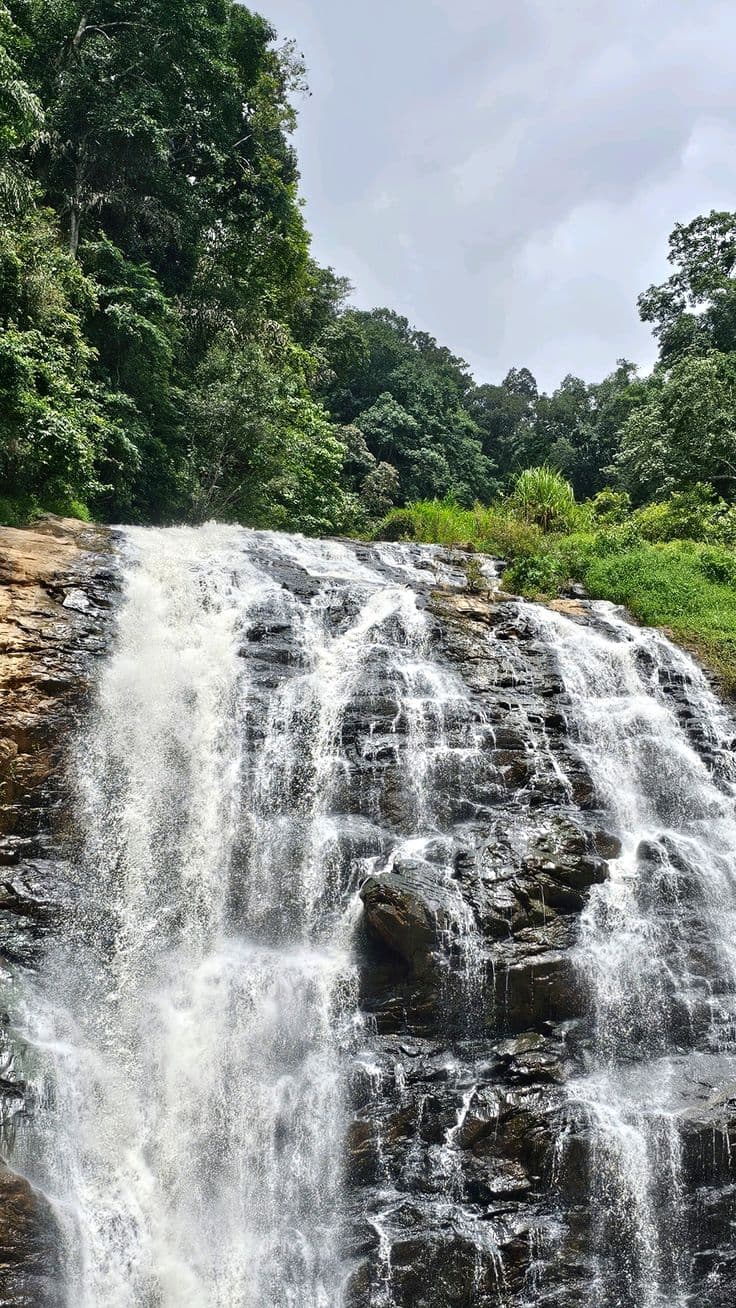
The same rain that keeps peak-season crowds away is what makes Coorg's coffee cultivation possible at all — and it turns every waterfall in the district to full flow. Abbey Falls, unremarkable in dry season, becomes genuinely dramatic; mist settles over the hills most mornings, giving the whole landscape a softer look than the postcard-blue-sky version most visitors picture.
Kodava Culture and the Martial Tradition
The Kodava community, native to this region, maintains a distinct cultural identity within Karnataka that goes well beyond cuisine and coffee — Kodavas are traditionally permitted to carry firearms without a license under a colonial-era exemption that's remained in place post-independence, a legal quirk tied to the community's historical martial tradition and disproportionately high representation in the Indian armed forces relative to its small population. Kodava weddings and the annual Puthari harvest festival, involving rifle-fired salutes and rice-harvest rituals, remain visibly distinct from customs elsewhere in Karnataka.
Coorg's cuisine — pandi curry (a distinctive pork preparation), kadambuttu (rice dumplings), and a use of kokum-like souring agents specific to the region — reflects this same separate cultural identity, and is worth seeking out deliberately rather than assuming it overlaps with generic South Indian food.
Quick Facts
- Kodagu — a historically separate kingdom until British annexation in 1834
- Sage Baba Budan smuggling beans from Yemen in the 1600s
- Talakaveri, tied to the Sage Agastya origin myth
- Tula Sankramana at Talakaveri, every October
- June–September, for full waterfalls and thinner crowds
Getting There
Coorg is roughly 5–6 hours from Bangalore by road via Mysore — the same route whether visiting in peak season or monsoon, though monsoon travel rewards flexibility around road conditions near the ghats.
Our Weekend Getaway Coorg trip covers the jeep ride to Mandalpatti, Abbey Falls, Raja's Seat, Madikeri Market, Harangi Elephant Camp, and the Namdroling Monastery — all workable across seasons, so you can book the quieter monsoon window without giving up the core itinerary.