Rishikesh: How a Rama Penance Legend Became the World's Yoga Capital
Rishikesh's name comes from a Vishnu legend, and it became a spiritual capital after Rama performed penance here for killing Ravana — the mythology and history behind the yoga capital of the world.
Rishikesh's modern reputation — yoga capital of the world, Beatles pilgrimage site, whitewater rafting hub — sits on top of a much older identity as one of Hinduism's significant spiritual centers, and the name itself carries a specific legend most visitors never ask about.
History
Rishikesh has functioned as a waypoint and spiritual retreat for sages and pilgrims for a very long time, positioned at the point where the Ganga leaves the Himalayan foothills and enters the plains — a geographically symbolic threshold that's part of why ashrams and spiritual institutions have clustered here for centuries, well before international tourism arrived. Its global fame accelerated sharply in 1968, when the Beatles spent several weeks at Maharishi Mahesh Yogi's ashram studying Transcendental Meditation — a visit that produced a significant portion of the band's White Album and introduced the concept of yoga retreats in the Indian Himalayas to a Western audience at a scale nothing before it had managed. The now-abandoned ashram, informally nicknamed "Beatles Ashram," remains a pilgrimage site of a very different kind today, its walls covered in fan art and Beatles lyrics.
Mythology & Legend
The name "Rishikesh" is generally explained through a Vaishnavite legend: after a long and difficult penance, Vishnu is said to have appeared here as Hrishikesh — "lord of the senses" — to a sage, and the town's name is a corruption of that epithet. A second, equally significant legend ties the town to Rama: after killing the demon-king Ravana in the Ramayana's climactic war, Rama is said to have performed penance at this location to atone for the sin of killing a Brahmin (Ravana, despite being a demon-king, was of Brahmin lineage by birth) — a detail that connects Rishikesh directly to the broader Panch Kedar and Char Dham penance-and-atonement mythology found throughout this stretch of the Himalayas.
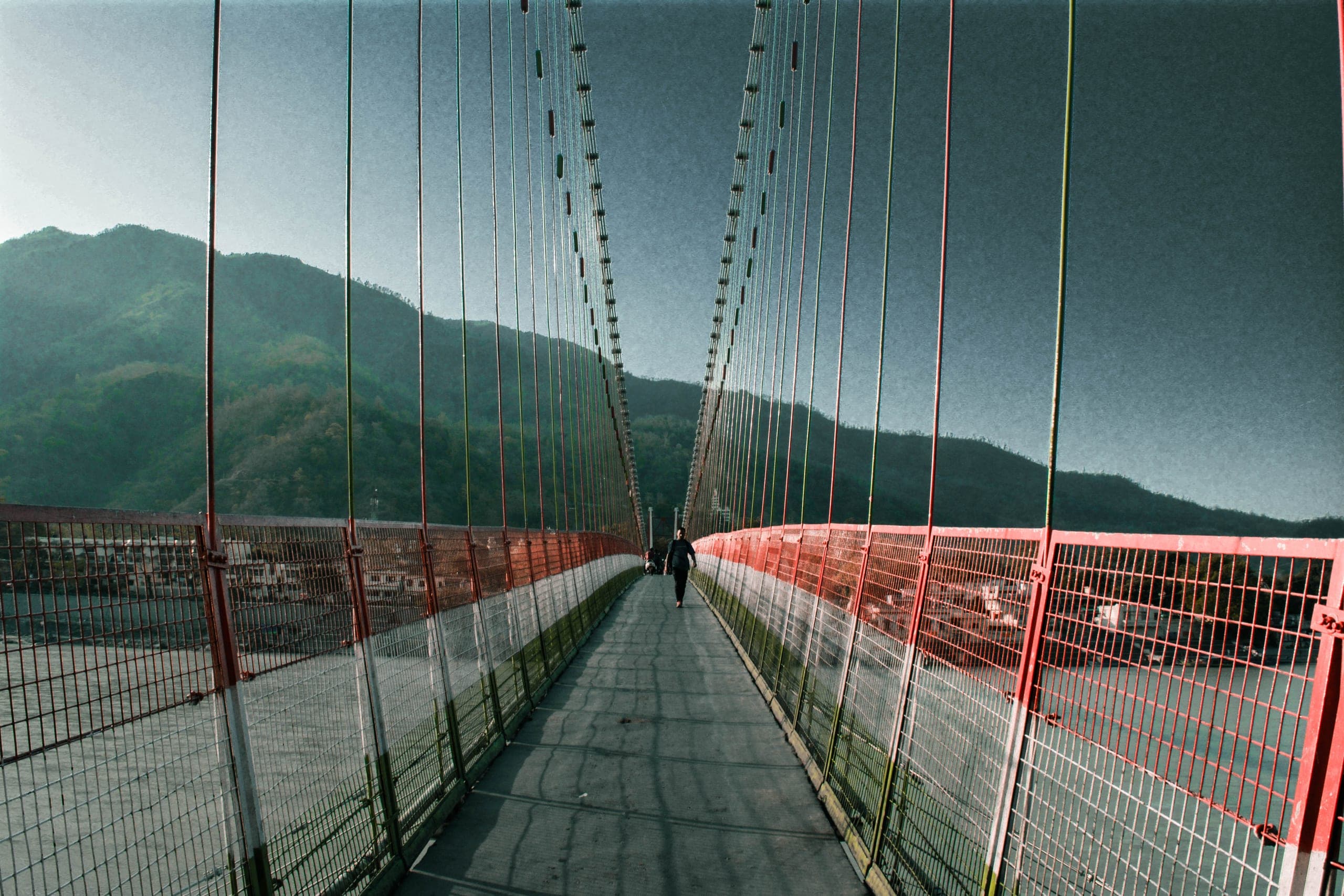
Rishikesh's twin suspension bridges — Ram Jhula and Lakshman Jhula — are named for exactly this legend: Lakshman Jhula marks, by tradition, the spot where Lakshmana crossed the Ganga on a jute rope bridge, while Ram Jhula, built later, extends the same naming logic in his brother's honor.
The nightly Ganga Aarti at Parmarth Niketan and Triveni Ghat — smaller in scale than Varanasi's but arguably more intimate — draws its ritual logic from the same river-worship tradition found throughout the Ganga's course, adapted here to a town whose spiritual identity is built as much around yoga and meditation as around temple ritual.
From Ashram Town to Adventure Hub
Rishikesh's identity has broadened considerably since the Beatles-era ashram boom — the town is now equally well known for whitewater rafting on the Ganga's grade-III and grade-IV rapids between Shivpuri and Rishikesh, bungee jumping, and a general adventure-tourism economy that sits somewhat uneasily alongside its older reputation as a strictly meditative retreat town. The annual International Yoga Festival, held every March at Parmarth Niketan, is one attempt to formally bridge those two identities, drawing practitioners and teachers from dozens of countries for a week of structured study rather than casual tourism.
Ashrams here range enormously in character, from large, internationally known institutions with strict daily schedules to small, family-run retreats operating out of a handful of rooms — a diversity that makes "doing Rishikesh" mean something quite different depending on which corner of that spectrum a visitor engages with.
Quick Facts
- From "Hrishikesh," a Vishnu epithet meaning "lord of the senses"
- Said to be where Rama performed penance after killing Ravana
- 1968, at Maharishi Mahesh Yogi's ashram — produced much of the White Album
- Ram Jhula and Lakshman Jhula, both named for Ramayana figures
- Self-declared "Yoga Capital of the World," major whitewater rafting hub
- September–November and February–April
Getting There
Rishikesh is roughly 45 minutes from Dehradun's Jolly Grant Airport and well-connected by road and rail via Haridwar, making it an easy first or last stop on a wider Uttarakhand itinerary.
Our Unplugged Uttarakhand trip covers Dehradun, Rishikesh's ashrams and Ganga Aarti, a Jim Corbett wildlife safari, and Nainital's colonial-era lake town in one route.
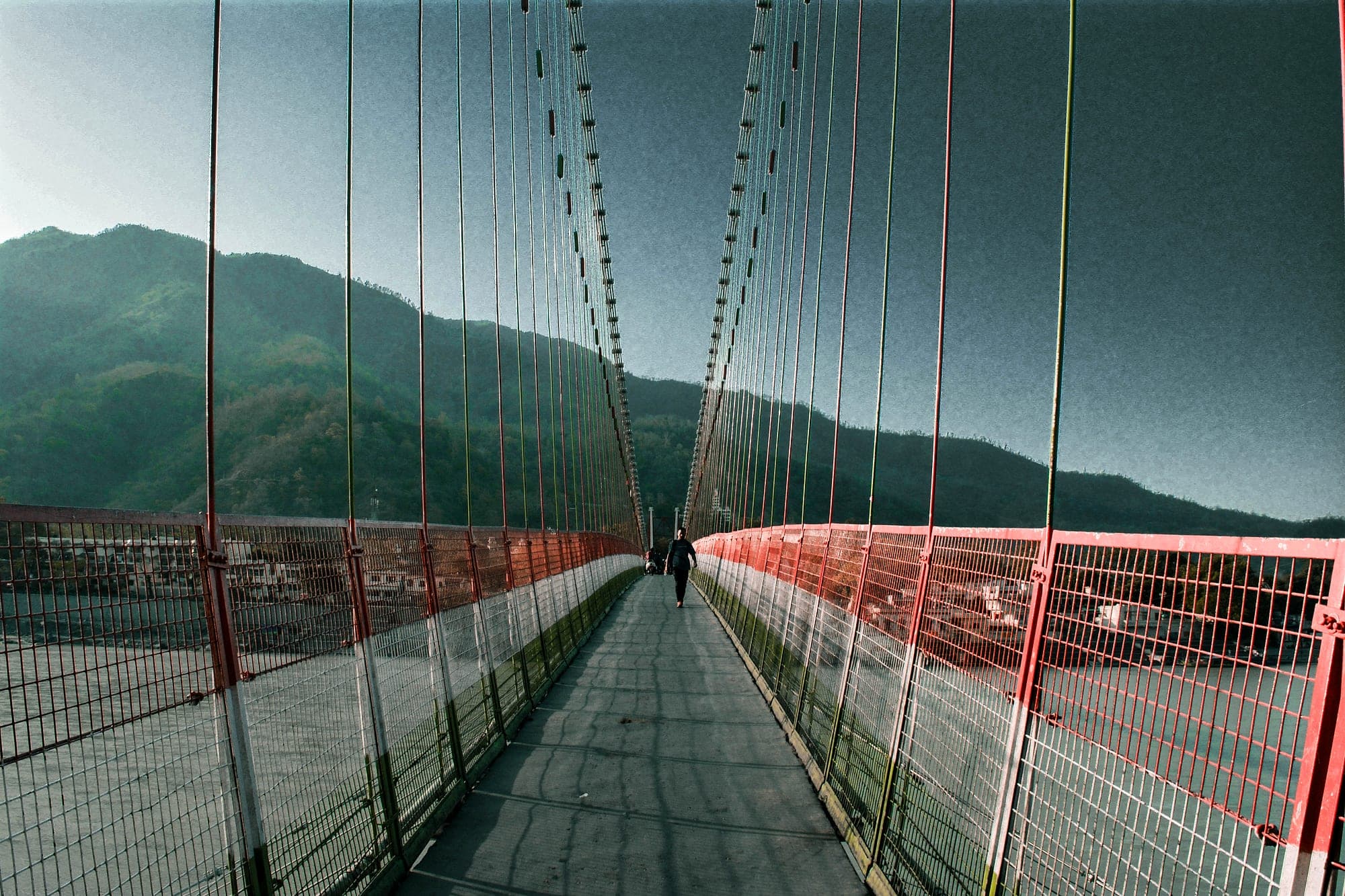
Photo: Madrishh / CC BY-SA 4.0