Valley of Flowers: The UNESCO Trek That Beats the Char Dham Circuit
The Valley of Flowers is a UNESCO World Heritage trek with a Ramayana Sanjeevani legend and 600+ alpine flower species, paired with Hemkund Sahib's glacial lake — full history and trek facts.
Most Uttarakhand pilgrimage circuits are built around temples — Kedarnath, Badrinath, Gangotri, Yamunotri. The Valley of Flowers is the rare Himalayan trip in the same region built around nature instead, and it carries a UNESCO World Heritage listing and a Ramayana legend that most visitors never hear about.
History
The valley was effectively unknown outside local shepherd communities until 1931, when British mountaineer Frank Smythe stumbled onto it while descending from an expedition and was startled enough by what he found to write an entire book about it, published in 1938 under the title The Valley of Flowers. That book is largely responsible for putting the valley on the international map. It was declared a National Park in 1982 and, in 2005, inscribed as a UNESCO World Heritage Site jointly with the adjoining Nanda Devi National Park — recognition of a genuinely rare high-altitude ecosystem, not just a scenic meadow.
Mythology & Legend
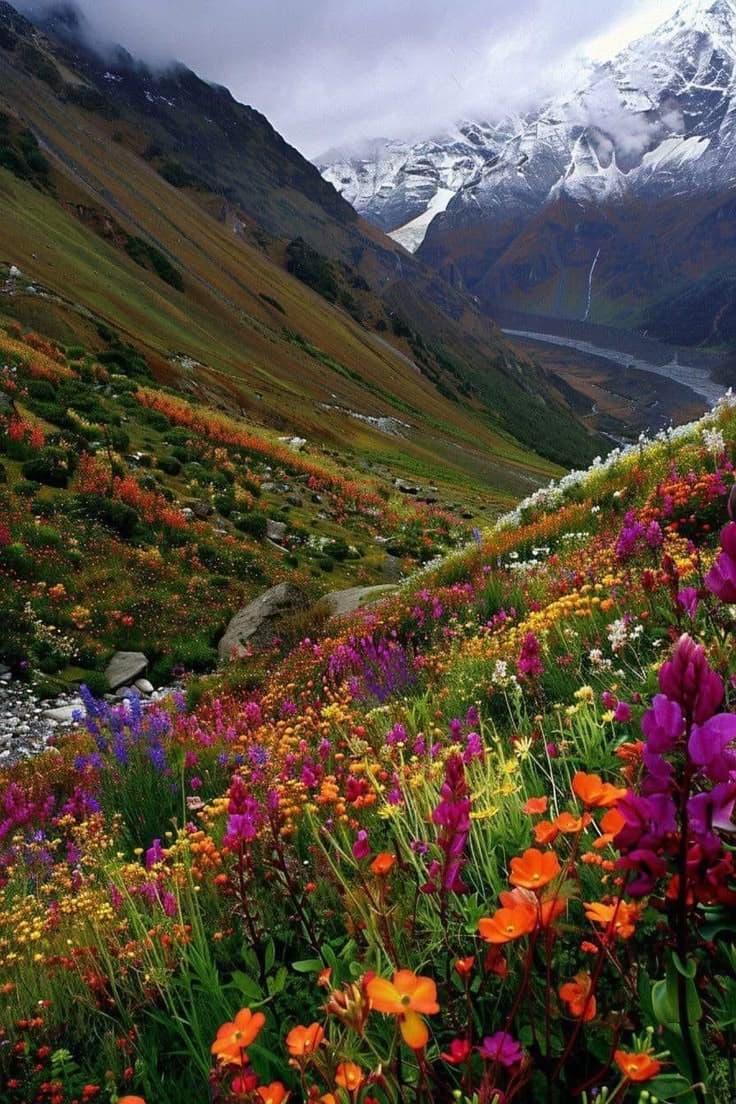
The valley's older, pre-colonial name in local tradition ties it to the Ramayana. When Lakshmana was gravely wounded in the war against Ravana, Hanuman was sent to fetch the Sanjeevani herb from a Himalayan mountain to revive him — and by local legend, this valley, thick with rare medicinal alpine plants, is identified as part of that same herb-rich Himalayan terrain the story describes. It's a claim shared by a few different Himalayan locations, but the valley's genuinely unusual density of rare flora — over 600 recorded flowering plant species in a relatively small area — is part of why the association has stuck here specifically.
Frank Smythe's own account describes walking into the valley and finding "a paradise of flowers" so unexpected after weeks of grey expedition terrain that he initially assumed he'd misjudged the route.
Adjoining the valley is Hemkund Sahib, one of the highest Sikh Gurudwaras in the world at over 4,300 metres, built beside a glacial lake ringed by seven peaks. Sikh tradition holds that Guru Gobind Singh, the tenth Sikh Guru, meditated at this exact lake in a previous life — a story recorded in his own autobiographical work, the Bachittar Natak, which describes meditating beside a lake surrounded by seven mountains, a description later pilgrims matched to this specific site.
What's Actually Blooming
The valley's flower calendar shifts through the season rather than blooming all at once — early July tends to bring blue poppies and primulas, while August and early September shift toward marsh marigolds, geraniums, and a dense carpet of impatiens across the valley floor. Botanists have used the valley as a study site for decades precisely because of this staggered blooming pattern across a relatively compact, accessible altitude range, something few other Himalayan meadows offer in comparable density.
The trek in is also home to blue sheep (bharal) and, at higher and less frequently visited elevations, the occasional snow leopard sighting — rare enough that most visitors won't see one, but common enough that park rangers take the possibility seriously when briefing trekking groups on wildlife protocol.
Quick Facts
- World Heritage Site since 2005 (jointly with Nanda Devi National Park)
- Over 600 recorded, peaking late July to early September
- 1931, by mountaineer Frank Smythe
- Associated with the Sanjeevani herb from the Ramayana's Lakshmana revival story
- Hemkund Sahib Gurudwara, 4,329 m, tied to Guru Gobind Singh's meditation legend
- June to October only
Getting There
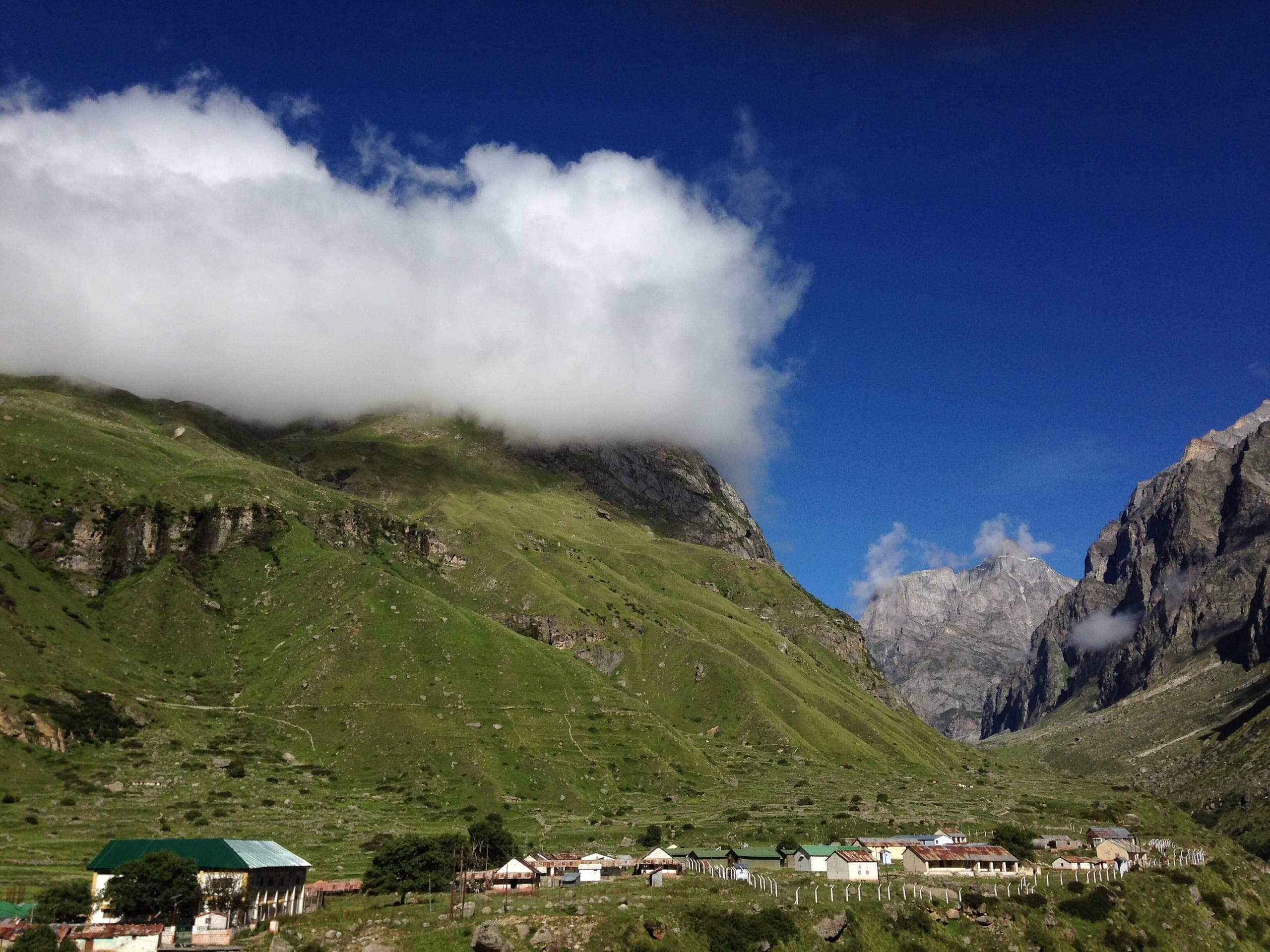
The approach runs via Govindghat and the village of Ghangaria, which serves as base camp for both the Valley of Flowers and Hemkund Sahib. Neither trek is technical, but both involve sustained uphill walking at altitude — reasonable fitness matters more than gear.
Our Valley of Flowers trip starts from Rishikesh, drives through Joshimath to Govindghat, treks into Ghangaria, and covers both the valley and Hemkund Sahib before looping back — so permits and altitude pacing are handled rather than something you have to piece together solo.
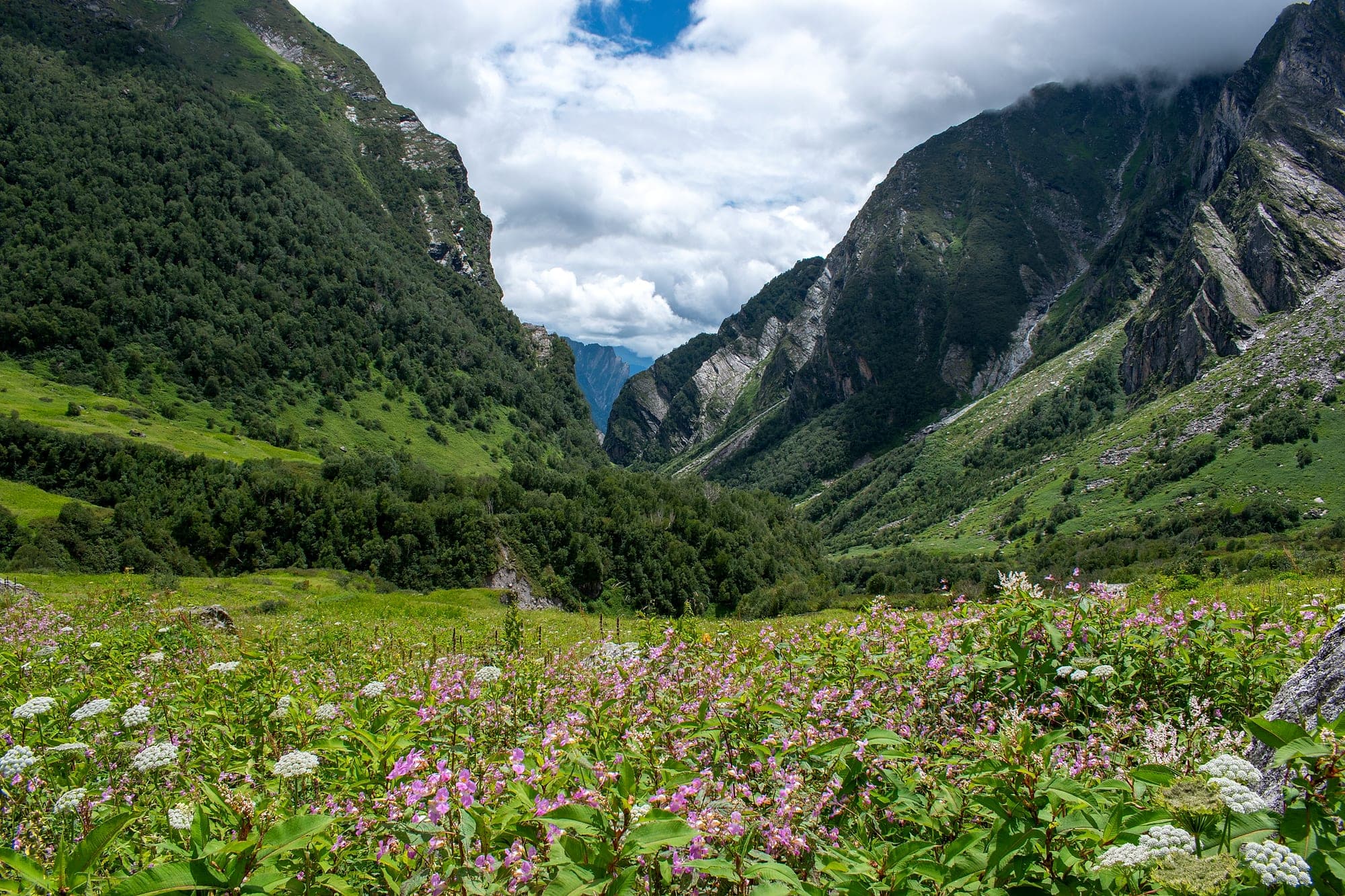
Photo: Rohit Sharma / CC BY-SA 4.0