Mana Village: Where the Mahabharata Ends and India's Last Village Begins
Mana is India's last village before Tibet — Vyasa Gufa, Bhim Pul, and the legend of Ganesha writing the Mahabharata while the Saraswati river vanishes underground beside it.
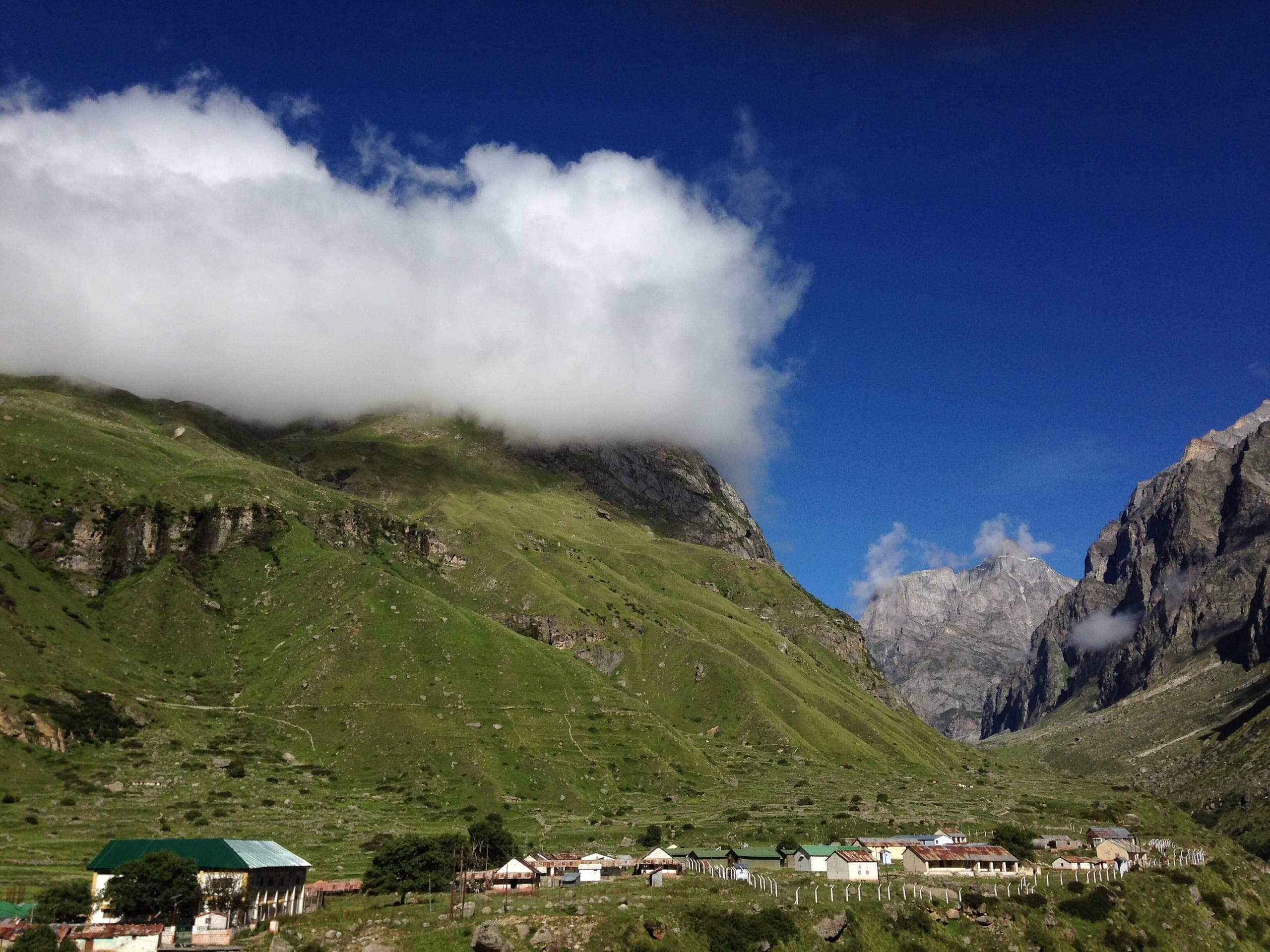
Most travelers who reach Badrinath consider the trip complete once they've had darshan at the temple. Three kilometres further up the road, Mana Village — officially India's last inhabited settlement before the Tibet border — holds a set of Mahabharata legends dense enough to fill an afternoon on their own.
History
Mana sits at roughly 3,200 metres in Chamoli district, historically populated by the Marchha tribal community, whose traditional livelihood combined subsistence farming with trans-Himalayan trade with Tibet — a trade route, like Kinnaur's, that was severed after the 1962 India-China war. Today the village is seasonal: inhabited from around May to November, then evacuated entirely as residents move down to lower villages for the winter, when snow makes Mana unlivable. It shares that same closed-border history with Chitkul in Himachal, one more Himalayan village whose economy was permanently altered by a war fought over a border most of its former customers never saw again.
Mythology & Legend
Mana's specific claim to mythological fame is that this is traditionally identified as the place where the sage Vyasa composed the Mahabharata — with Ganesha, by legend, serving as the scribe, on the condition that Vyasa never pause in his dictation, and Vyasa's counter-condition that Ganesha understand every verse before writing it down, a narrating trick Vyasa used to buy himself thinking time throughout the epic's composition. Vyas Gufa, a cave shaped like an open book, is shown to visitors as the exact site of this collaboration.
A short walk away, Ganesh Gufa marks, by the same tradition, where Ganesha actually sat to write. And spanning the roaring Saraswati river nearby is Bhim Pul — a natural rock bridge which legend attributes to Bhima, the second Pandava brother, said to have placed a massive boulder across the gorge so his wife Draupadi could cross safely during their exile.
The Saraswati river itself disappears into the ground at a spot called Keshav Prayag, just below Mana, merging invisibly with the Alaknanda — an actual hydrological phenomenon that Hindu tradition has long read as symbolic of the larger, more famous Saraswati river's own mythical disappearance underground in the plains of North India, one river's visible vanishing act standing in for a much larger, older story about a lost river.
Further beyond the village lies Vasudhara Falls, a roughly 122-metre waterfall said in local legend to withhold its blessing from those who arrive with impure intentions — a claim impossible to verify and entirely beside the point of a genuinely spectacular waterfall regardless.
Life in a Village That Empties Every Winter
Mana's seasonal rhythm is stark even by high-Himalayan standards: the entire population relocates to lower-altitude villages — commonly Gopeshwar or nearby towns — every November as snow makes the settlement unlivable, then returns each May to reopen homes, temples, and the small guesthouses that have grown up around Badrinath's pilgrim traffic. That twice-yearly migration, still practiced today essentially unchanged, is one of the more direct living connections to how high-Himalayan border communities have survived in this terrain for centuries.
The Marchha community's traditional livelihood, once built around trans-border trade with Tibet, has shifted almost entirely toward tourism and small-scale agriculture since the 1962 border closure — wool weaving, in particular, has persisted as a craft even after the trade routes that once supplied raw material from Tibet dried up, with local shawls and blankets now sold directly to the pilgrims and trekkers passing through.
Quick Facts
- ~3,200 metres
- Officially India's last village before the Tibet border, alongside Chitkul in Himachal
- Inhabited May–November only; evacuated for winter
- Traditionally Marchha tribal people, historically Tibet-border traders
- Vyas Gufa, Ganesh Gufa, Bhim Pul, Keshav Prayag, Vasudhara Falls
- Traditional site of the Mahabharata's composition by Vyasa and Ganesha
Getting There
Mana is 3 km beyond Badrinath Temple by road, making it an easy half-day add-on for anyone already making the Badrinath pilgrimage rather than a separate trip.
Our Divine Peaks trip covers Kedarnath, Chopta and Tungnath, and Badrinath in one route — with Mana Village and its Mahabharata sites included as part of the Badrinath leg, so this last-village detour is already built in rather than something you'd need to arrange separately.