Jibhi & Tirthan Valley: What Himachal Looked Like Before Manali Got Crowded
Jibhi and the Tirthan Valley in Banjar sit inside the old Rupi princely kingdom — river-side villages, the Jalori Pass fort legend, and treks without Manali's traffic.
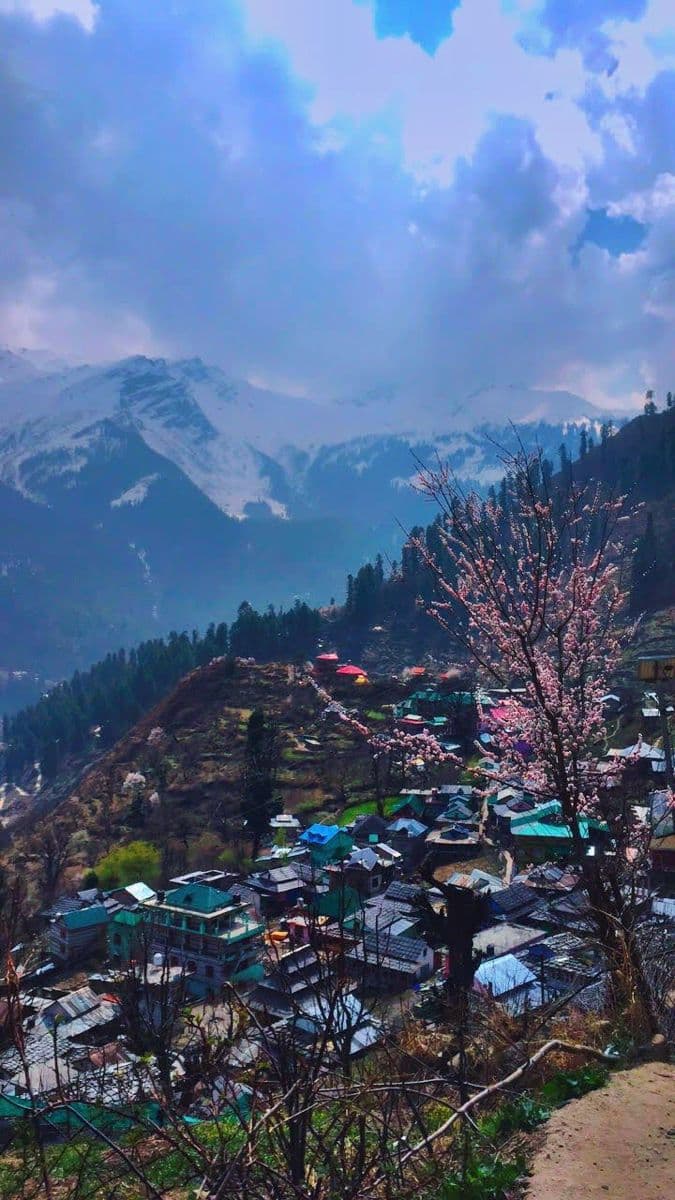
Manali in peak season means traffic jams on Mall Road and a queue for Solang Valley's zip-line. Jibhi, a couple of hours south in the Banjar Valley, is what people mean when they say they want the version of Himachal that existed before mass tourism arrived.
History
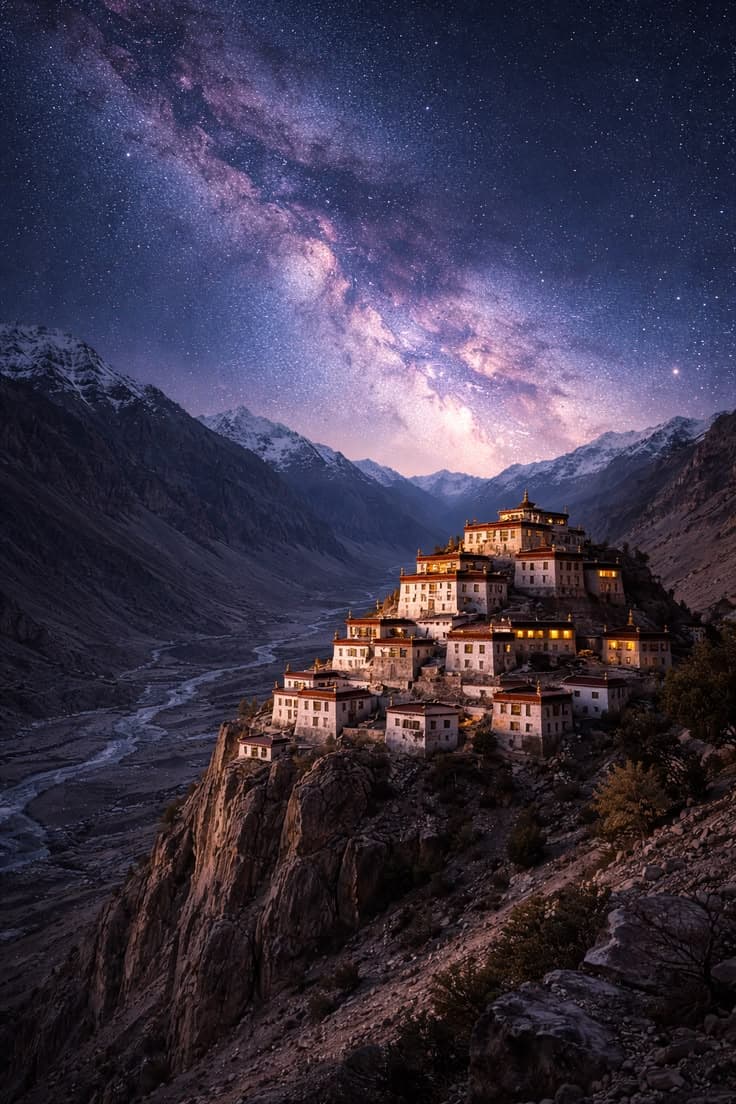
The Banjar Valley, where Jibhi sits, was historically part of the Rupi princely state, one of the small Himachali hill kingdoms that predated British paramountcy and the later integration of Himachal Pradesh as a single state after independence. That history shows up today mostly in the region's temple architecture — wood-and-stone pagoda-style temples built in a distinct local idiom, still standing in villages throughout the valley, largely untouched by the concrete construction boom that's reshaped Manali and Shimla.
The valley's relative obscurity is itself a modern historical accident: the road infrastructure that made Manali easy to reach at scale simply developed faster and more heavily than the roads into Banjar, so tourism growth diverted around it for decades. That's changing now, but slowly enough that Jibhi still feels closer to what Manali was several decades ago than to what Manali is today.
Legend & Local Lore
At the top of Jalori Pass — the high-altitude gateway out of the valley — stands Raghupur Fort, a ruined fortress linked in local legend to regional Rajput rulers who used the pass as a defensive chokepoint controlling movement between the Kullu and Shimla hill regions. Further along the same ridge lies Serolsar Lake, a small, sacred lake in a dense forest clearing said to be inhabited by the local deity Budhi Nagin, a serpent goddess — the lake is considered so sacred that locals traditionally avoid speaking loudly or behaving disrespectfully near its waters, a belief still observed by many trekkers passing through today.
Local guides in the region describe Serolsar as a lake that "listens" — a superstition significant enough that even secular trekkers tend to go quiet as they approach it, less out of belief than respect for how seriously locals take it.
The Great Himalayan National Park Connection
The Tirthan Valley sits at the edge of the Great Himalayan National Park, a UNESCO World Heritage Site since 2014, recognized for protecting one of the last remaining undisturbed watersheds in the Western Himalayas — home to snow leopards, Himalayan tahr, and species found almost nowhere else at this accessibility level. That protected-area boundary is part of why development around Jibhi has stayed comparatively restrained: large stretches of the surrounding forest simply can't be built on, which has kept the valley's character intact in a way unprotected hill towns elsewhere haven't managed.
Local homestays throughout the valley lean heavily on Himachali Pahadi cuisine — siddu (steamed wheat dumplings), madra (a chickpea curry cooked in yogurt), and trout pulled straight from the Tirthan — food that's harder to find in Manali's more generically "hill station" restaurant scene.
Quick Facts
- Banjar Valley, Kullu district — historically part of the Rupi princely state
- Jalori Pass, ~3,120 m, with panoramic Himalayan views
- Raghupur Fort, linked to regional Rajput defensive history
- Serolsar Lake, associated with the serpent goddess Budhi Nagin
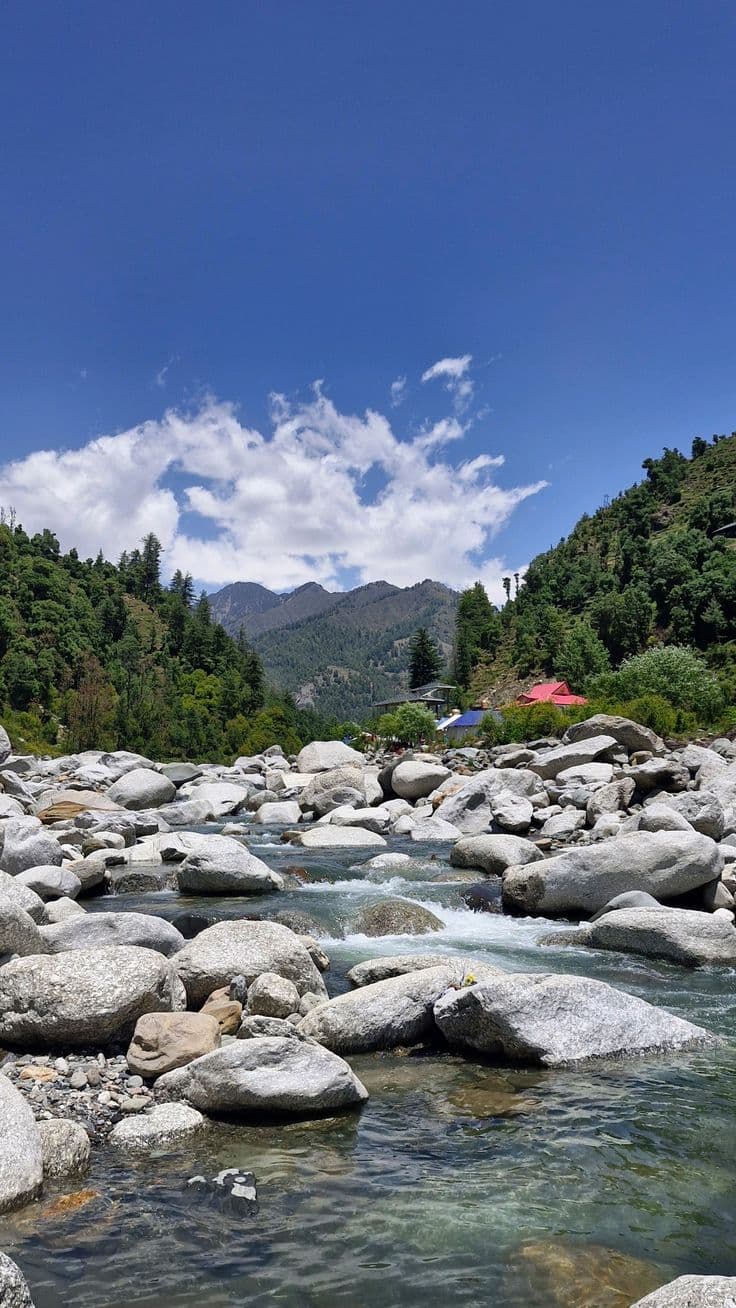
- Tirthan, popular for trout fishing and riverside walks
- March–June and September–November
Getting There
Jibhi is roughly three hours south of Manali by road, reached via Kullu and the Banjar Valley — close enough to combine with a Manali trip, far enough that it doesn't get Manali's crowd.
Our Unexplored Himachal trip treats Jibhi as one stop in a longer offbeat loop — Manali, Kasol, and Jibhi, then over Jalori Pass to Bir Billing for paragliding — so you get the contrast between Himachal's commercial stops and its quiet ones in a single trip.
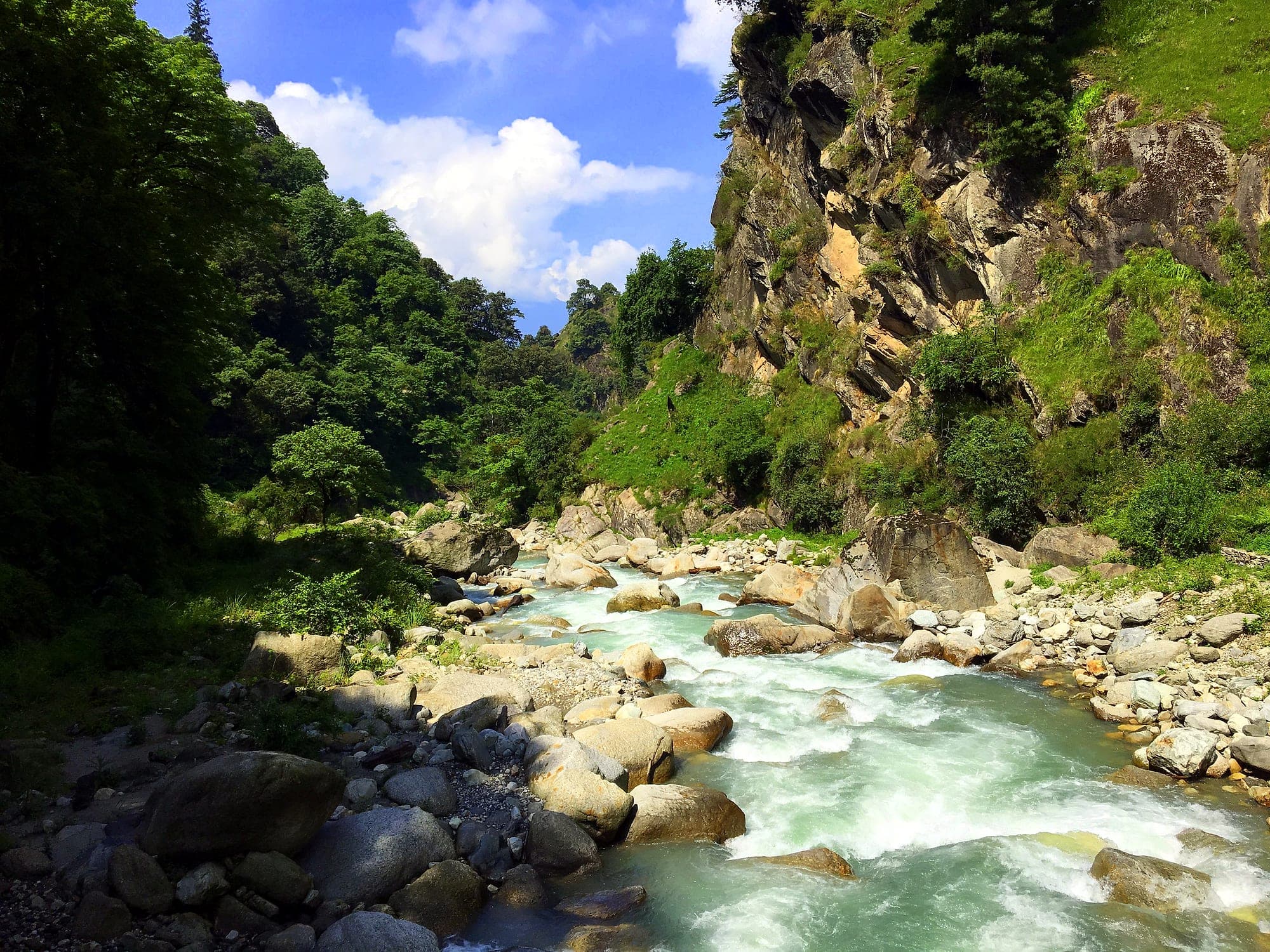
Photo: Ankitwadhwa10 / CC BY-SA 4.0