Kasol Beyond the Backpacker Crowd: Manikaran, Kheerganga, and the Real Parvati Valley
Kasol's cafe-strip reputation hides a valley with real depth — Manikaran Sahib's Shiva-Parvati hot spring legend, Kheerganga's sage mythology, and the Israeli trail history behind Kasol itself.
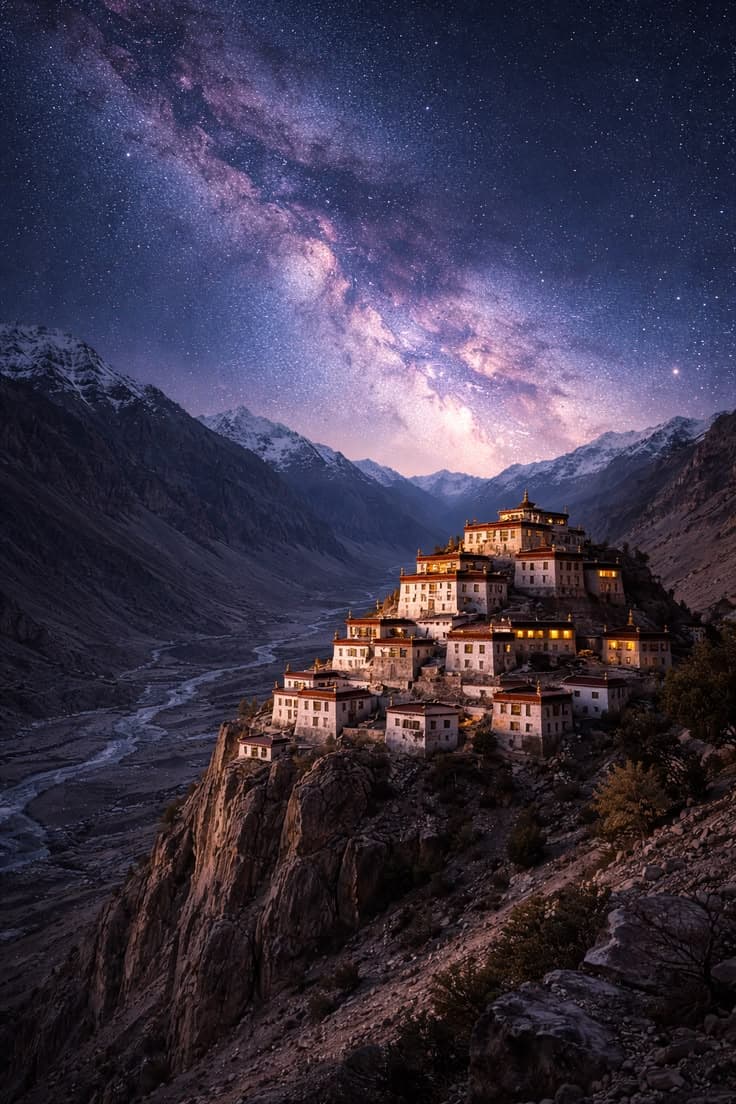
Kasol's main street has a reputation that's been written about a hundred times — Israeli-run cafes, live music, a certain backpacker aesthetic. What that reputation consistently misses is that Kasol is really just the entry point to the Parvati Valley, and the valley itself carries mythology far older than its current tourist identity.
History: how Kasol got its backpacker identity
Kasol's transformation began in the 1990s, when Israeli backpackers — many decompressing after mandatory military service — started arriving in numbers, drawn by the valley's cheap guesthouses, the Parvati river, and (initially) the region's cannabis cultivation. Hebrew signage, Israeli cuisine, and a distinct backpacker economy grew up around that traffic over the following two decades, turning a small village into what's now sometimes called "Mini Israel." It's a genuinely unusual case of a specific diaspora subculture reshaping a Himalayan village's commercial identity within a single generation.
Mythology & Legend
Manikaran, a short drive from Kasol, predates all of that by a very long way. Its name and its natural hot springs are the subject of one of the valley's oldest stories: according to legend, Parvati lost her earring (mani) while bathing with Shiva at this spot, and when Shesha Naga, the serpent king, was asked to find it, he did so by producing a hot spring so forceful it flung the earring back to the surface — which is supposedly why the springs here run hot to this day. The Manikaran Sahib Gurudwara, built beside the springs, uses that same geothermal water to cook langar for pilgrims — a genuinely practical use of a mythological hot spring that few sacred sites can claim.
Sikh tradition adds its own layer: Guru Nanak is said to have visited Manikaran and, when a follower's food supply ran short, miraculously produced hot springs to cook the meal — a story that runs parallel to, rather than replacing, the older Shiva-Parvati legend.
Further up the valley, the Kheerganga trek — a roughly 12 km round trip ending at a natural hot spring at 2,960 metres — carries its own legend: this is said to be where Shiva meditated for thousands of years after Kartikeya's birth, with Parvati preparing kheer (rice pudding) for him at the site, which is how the place gets its name.
The Villages Further Up-Valley
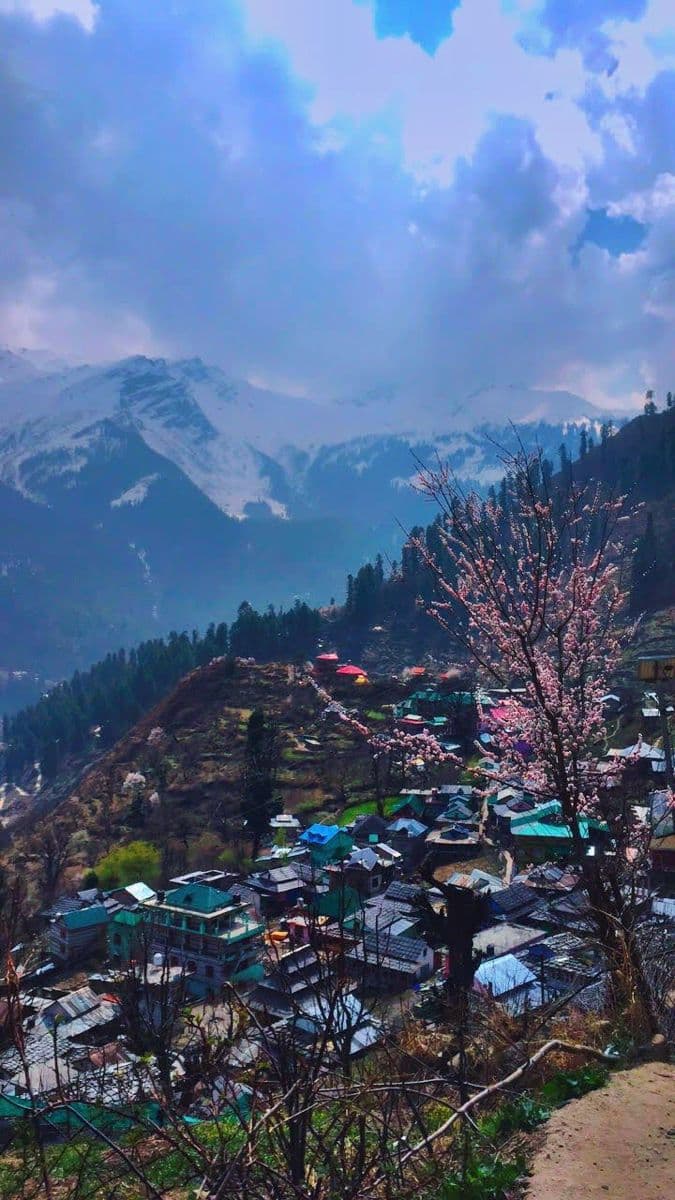
Past Kasol and Manikaran, the road (and eventually just a footpath) continues to Pulga, Tulga, and Kalga — a string of small Himachali villages that have, over the last several years, developed their own quieter version of Kasol's guesthouse culture, without the same density of cafes or crowd. These villages sit closer to the base of treks heading toward Sar Pass and the higher Parvati Valley routes, and they're where many long-term Kasol visitors eventually migrate once the main town starts to feel too built-up for their taste — a slow-motion repeat of the same pattern that turned Kasol itself from quiet village to backpacker hub in the first place.
The valley's cannabis cultivation, historically significant to the local economy and still visibly present in the wild-growing plants along many trails, remains illegal to harvest or possess despite its ubiquity — a legal grey zone that shapes a fair amount of the valley's tourist-facing culture without being openly acknowledged by most guesthouses.
Quick Facts
- Linked to a Shiva-Parvati legend involving Shesha Naga, the serpent king
- A major Sikh Gurudwara that cooks langar using the geothermal spring water
- ~12 km round-trip trek to a hot spring at 2,960 m, tied to a Shiva meditation legend
- Shaped largely by Israeli backpacker tourism from the 1990s onward
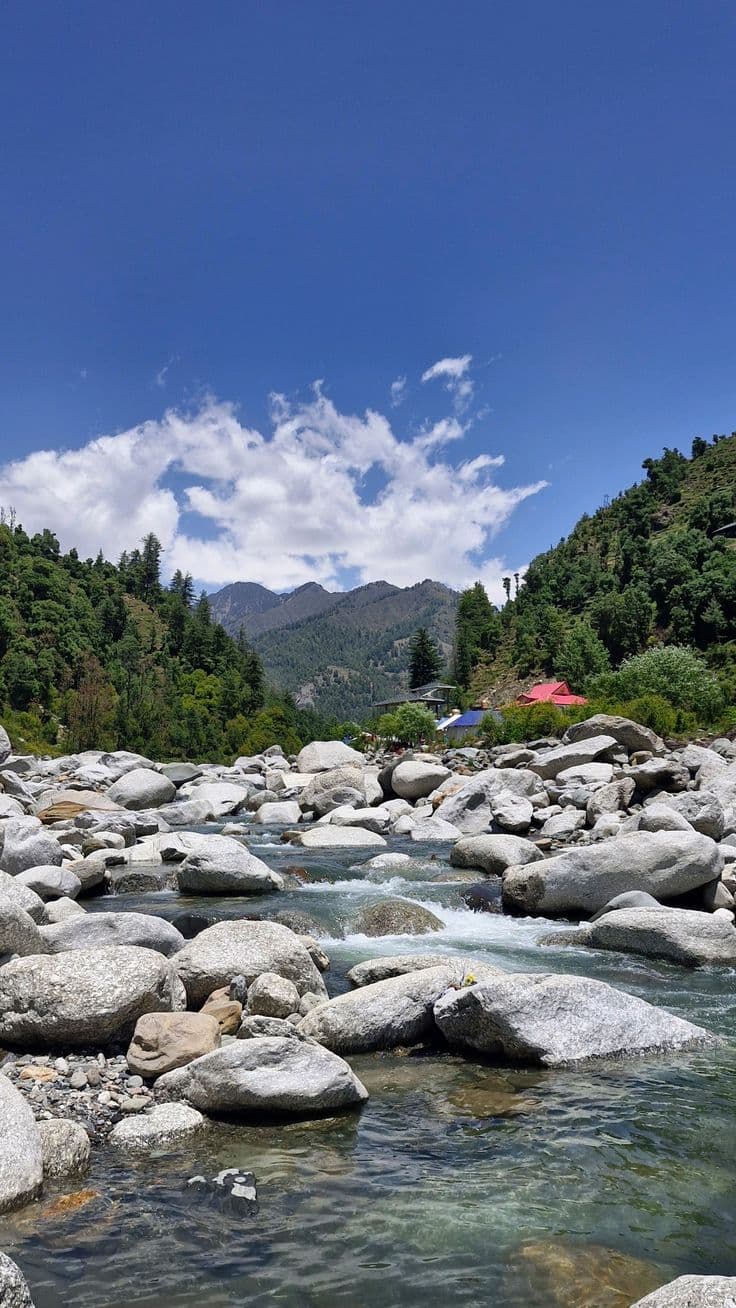
- Parvati — turquoise, fast-moving, and cold year-round
- Pulga, Tulga, Kalga — quieter than Kasol itself
Getting There
Kasol sits along the Parvati river, roughly a five-hour drive from Manali or Bhuntar airport, the nearest airstrip. Manikaran is a short local drive further up the valley; Kheerganga requires a half-day trek from the roadhead at Barshaini.
We build Kasol into our Unexplored Himachal itinerary alongside Manali and Jibhi — a river walk and DJ night in Kasol, a stop at Manikaran Sahib, then onward to the quieter Banjar Valley — so you see both the valley's modern backpacker layer and the older story underneath it.
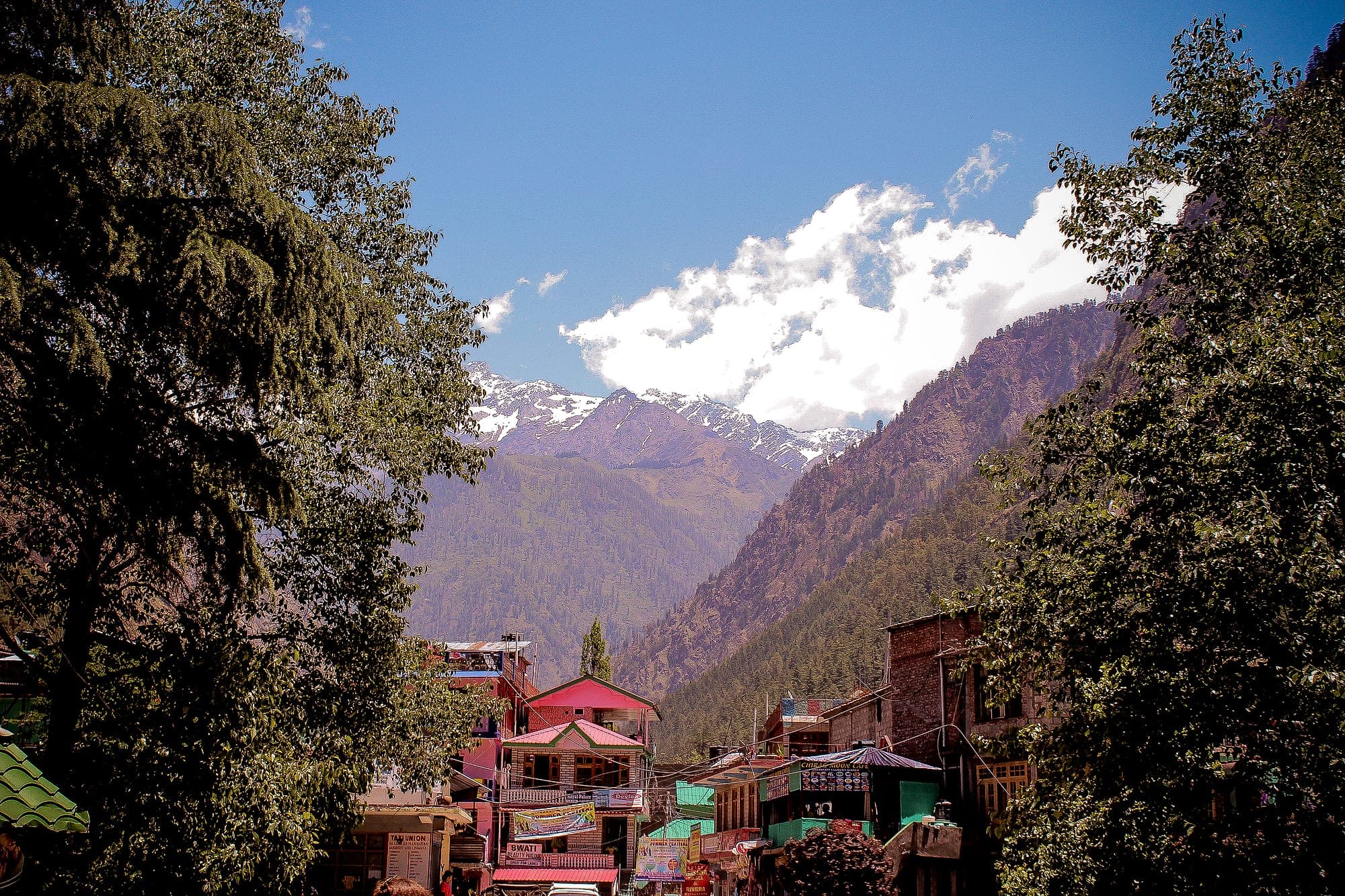
Photo: rohhit verma / CC BY-SA 4.0