Spiti Valley in Winter: Why the Off-Season Is Actually the Best Season
Winter Spiti trades summer's crowded Manali-Kaza road for the quieter Kinnaur route — Tabo Monastery's 1,000-year Buddhist history, Key Monastery's founding legend, and a valley almost no one visits in the cold.
Spiti Valley has become a fairly well-documented summer road trip over the last decade — Instagram made sure of that. What's still under-covered is that winter Spiti is a genuinely different trip, not just a colder version of the same one, and it runs through some of the oldest continuously operating Buddhist institutions in the Himalayas.
History
Spiti's Buddhist history runs deep — the valley sat along trade and pilgrimage routes connecting Tibet to the Indian plains for over a millennium, and its monasteries date back to the second wave of Buddhist expansion into the Western Himalayas around the 10th and 11th centuries CE, associated with the Tibetan translator-monk Rinchen Zangpo, credited with founding or inspiring over a hundred monasteries across the region. Tabo Monastery, founded in 996 CE, is the oldest continuously functioning Buddhist monastery in India and the Himalayas, predating even most of Tibet's own surviving monastic institutions — its mud-brick walls hold murals and manuscripts that art historians treat as irreplaceable, earning it comparisons to Buddhism's Ajanta Caves.
Mythology & Legend
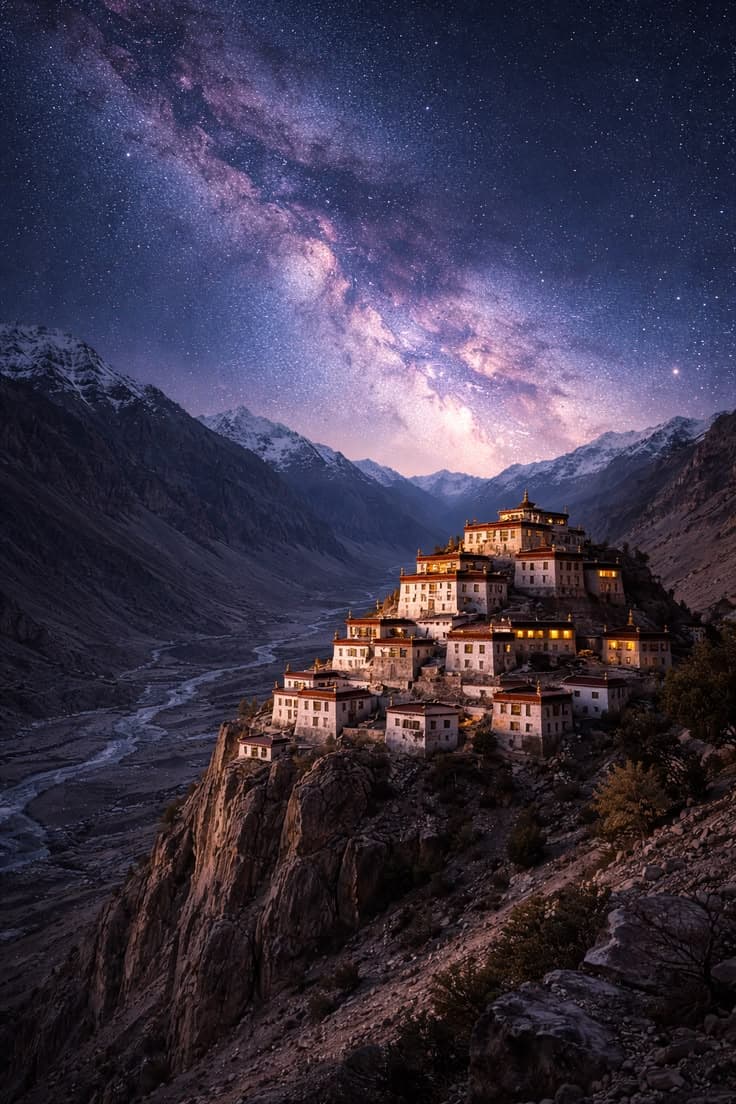
Key Monastery, perched dramatically on a hilltop above Kaza, has its own layered history of destruction and rebuilding — it was attacked multiple times over the centuries, by Mongol raiders, by rival kingdoms, and damaged by fire and earthquake, yet was rebuilt each time by the local community, who regard the monastery's survival itself as a mark of its sanctity. Local legend holds that the site was chosen because of a vision experienced by an early lama, identifying the hilltop as auspicious ground — a common origin story across Himalayan monastery foundations, but one that locals here recount with genuine specificity about which lama, which vision, which year.
Tabo Monastery is sometimes called the "Ajanta of the Himalayas" for its murals — and unlike many historic sites that have been heavily restored or reconstructed, much of what's inside Tabo's mud walls is original, over a thousand years old, still standing in a climate so dry and cold that decay has been unusually slow.
Life in a Winter Homestay
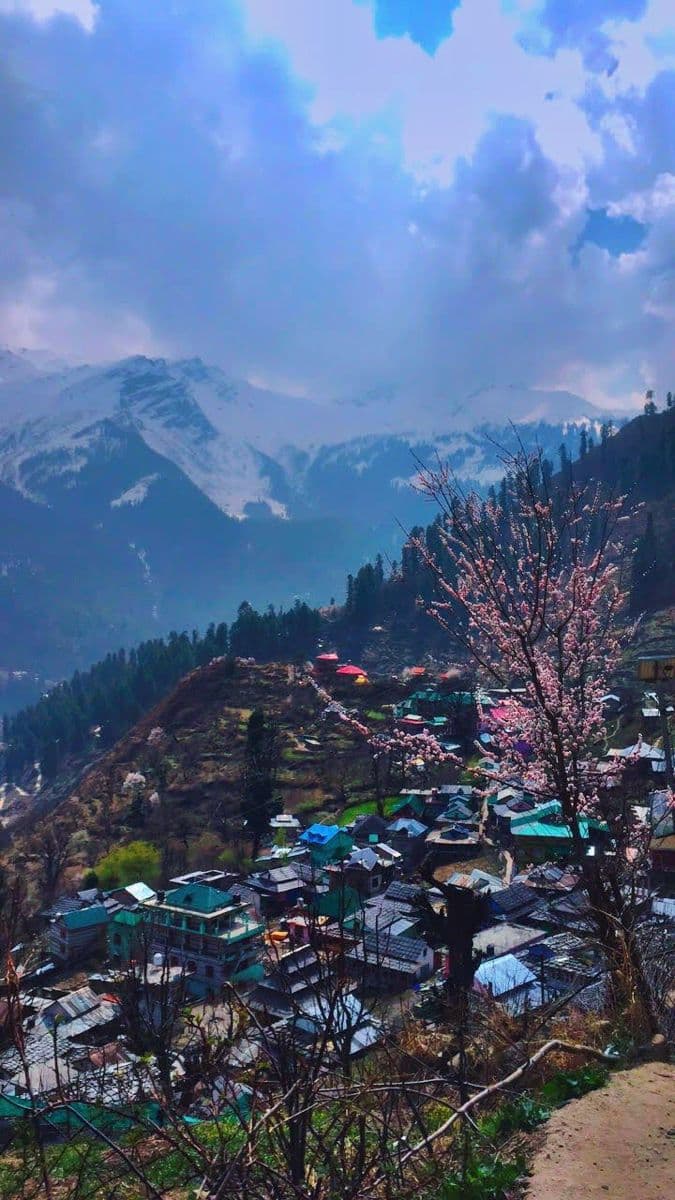
Winter Spiti travel runs almost entirely on homestays rather than hotels, and that's arguably the point rather than an inconvenience — families in Kaza, Kibber, and the smaller hamlets along the route open spare rooms to travelers during the only season when farming work pauses entirely, heated by traditional bukhari wood stoves and running on a rhythm dictated by how cold it actually is outside. Meals tend to be simple, hearty, and built around whatever's been stored from the last harvest — thukpa, momos, and butter tea appearing far more often than anything resembling a restaurant menu.
Road closures are a real possibility on any winter Spiti trip, not just a theoretical risk — a single heavy snowfall can shut the Kinnaur route for a day or more, and flexibility in the itinerary matters as much as any packing list.
Quick Facts
- 996 CE — oldest continuously operating Buddhist monastery in India
- Rinchen Zangpo, the "Great Translator," credited with over 100 Himalayan monasteries
- Repeatedly destroyed and rebuilt after raids, fire, and earthquake over centuries
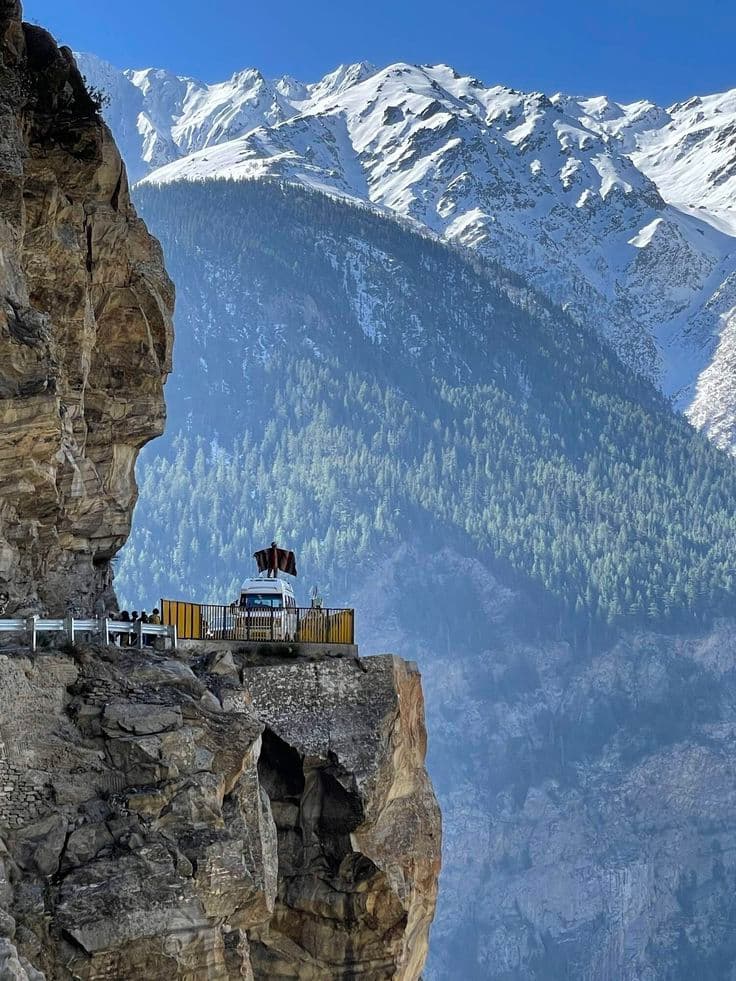
- One of Asia's highest suspension bridges, near Kibber village
- Via Shimla and Kinnaur (the Manali-side route closes with snow)
- December–February, once roads via Kinnaur are confirmed open
Getting There
Winter access runs via Shimla, Kalpa, and Kinnaur rather than the summer Manali route, which closes once snow blocks the high passes. The drive is long and the roads rougher in winter — this is a trip where local knowledge of road conditions genuinely matters.
Our Winter Escape Spiti trip covers Kalpa, Tabo, Kaza, Key Monastery, Kibber, and Chicham Bridge, with a trip captain handling the road-condition and homestay logistics that make winter Spiti harder to plan solo than its summer counterpart.
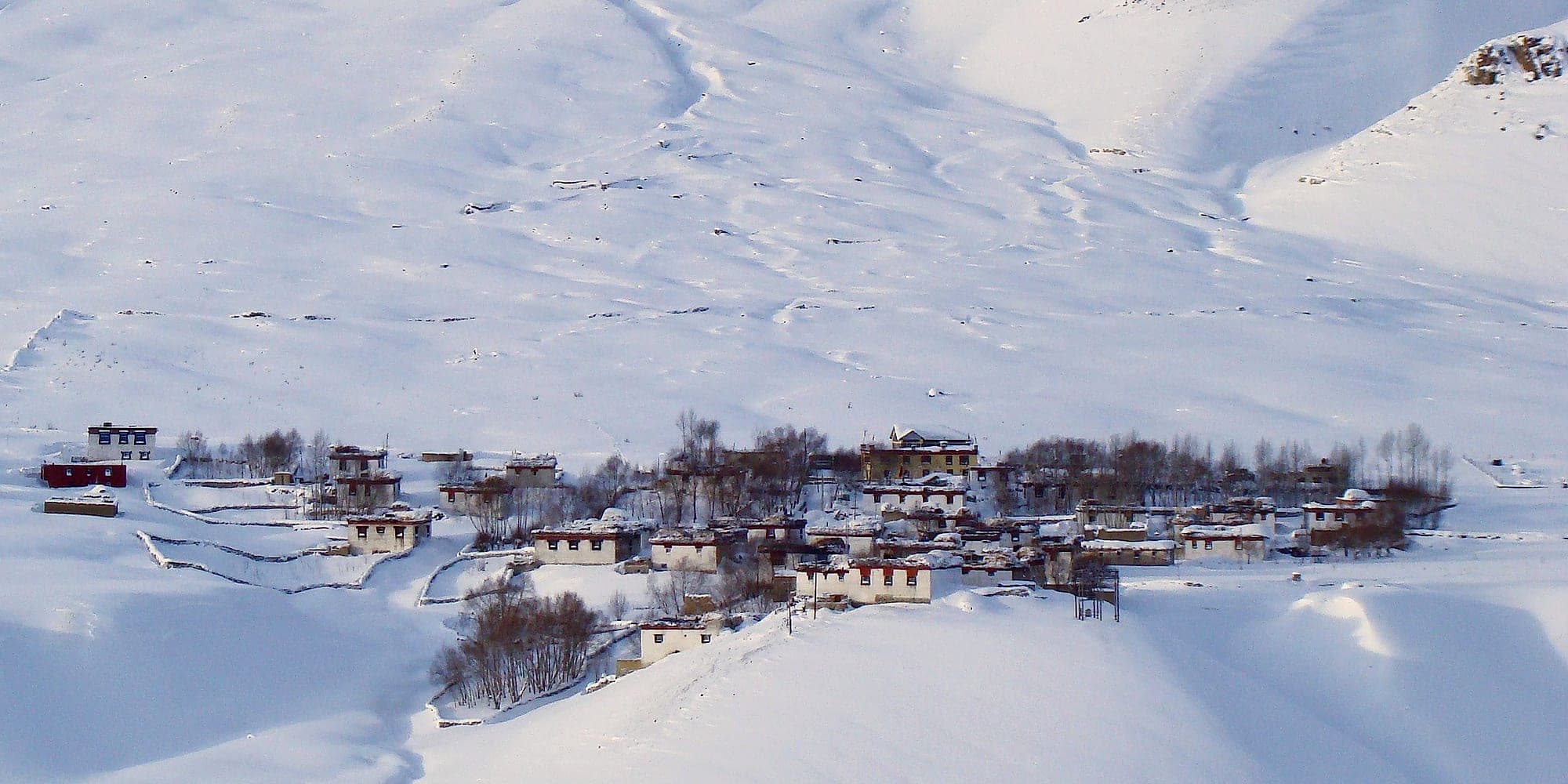
Photo: Ksuryawanshi / CC BY-SA 3.0