Photo: Naveen Kumar Manne / CC BY-SA 4.0
Bhoota Kola
Coastal Karnataka's spirit-worship ritual — performers embody local guardian spirits (bhootas) in a tradition distinct from, and older than, mainstream Hindu temple worship in the region.
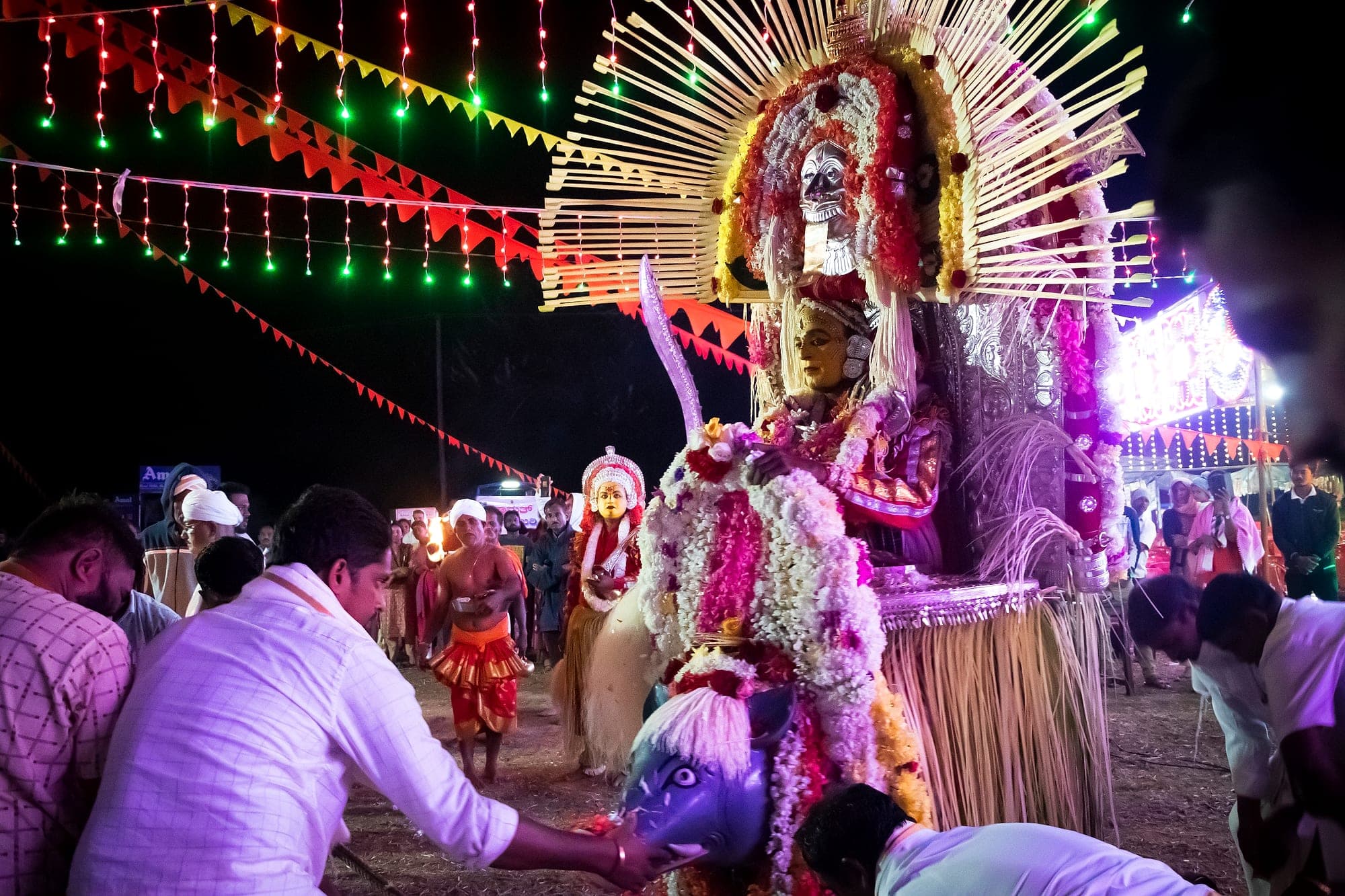
Bhoota Kola belongs to Tulunadu — the Tulu-speaking coastal belt covering Udupi and Dakshina Kannada districts — and like Theyyam in neighboring Kerala, it's a ritual where the performer is believed to become the spirit they're portraying, not merely depict it.
History & Significance
"Bhoota" refers to spirits — typically nature spirits, deified ancestors, or guardian entities tied to a specific village, family lineage, or piece of land — worshipped in Tulunadu through a tradition that predates and runs parallel to, rather than descending from, mainstream Sanskritic Hindu practice. Common bhootas include Panjurli (associated with a wild boar), Guliga, and Pilichamundi, each with village-specific legends explaining their origin and the protective role they play for the community that worships them.
What Happens
A performer, usually from a specific hereditary community whose traditional role is to embody bhootas, undergoes elaborate makeup, costuming, and often fire-based ritual elements, entering a trance state to the accompaniment of traditional drumming (thembre and other instruments specific to the ritual). Once possessed, the performer — now addressed and treated as the bhoota itself — delivers judgments on village disputes, blesses attendees, and is consulted on matters the community considers beyond ordinary resolution, giving the ritual a real, active social function beyond performance.
Quick Facts
- Main season runs December to May, timed to individual village and family shrine calendars
- Villages across Udupi and Dakshina Kannada districts, coastal Karnataka
- Panjurli, Guliga, Pilichamundi, among many others
- Hereditary, from specific community lineages
- Combines ritual performance with real village dispute resolution and blessing