Photo: Goutam1962 / CC BY-SA 4.0
Dev Deepawali
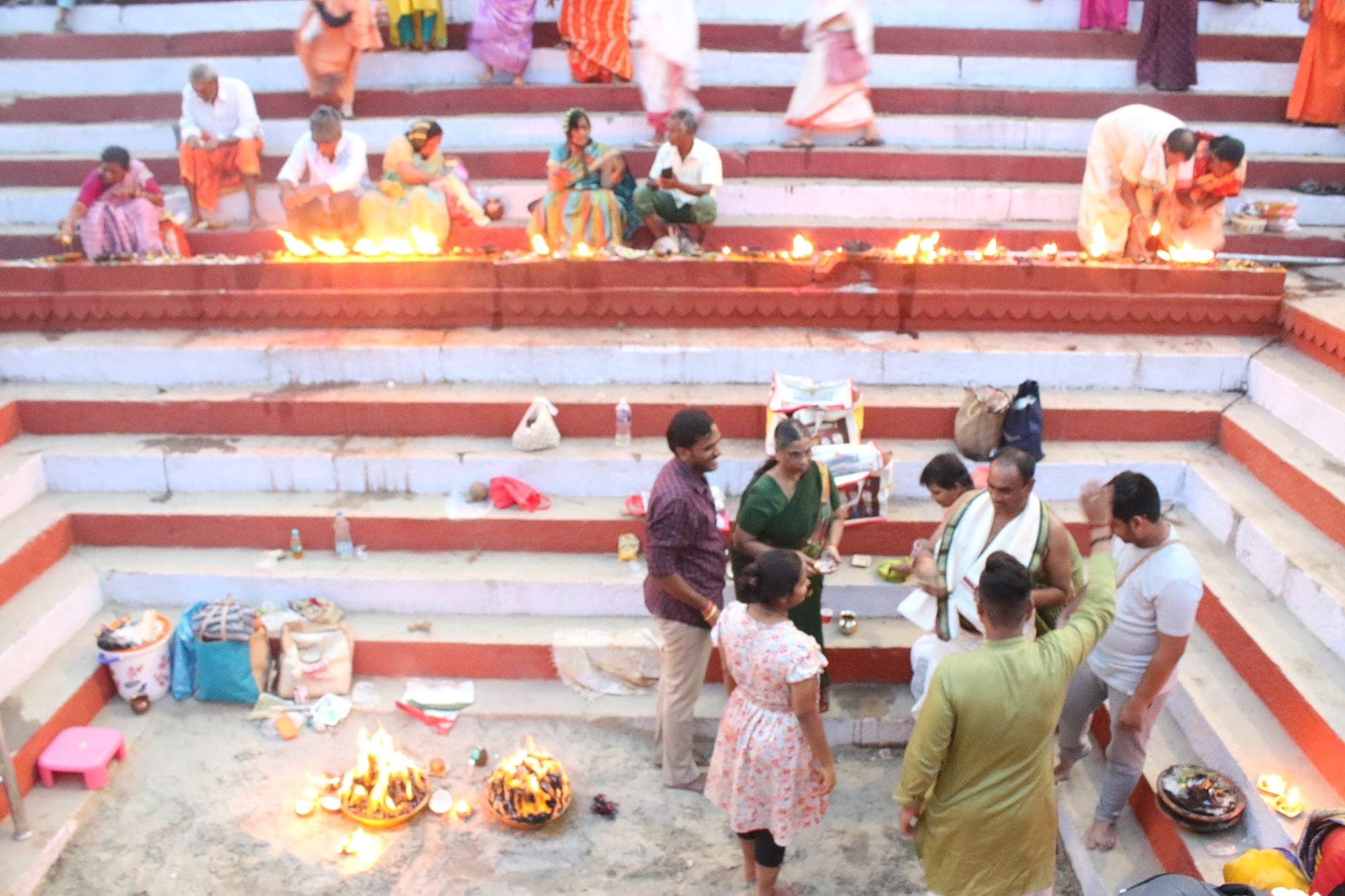
Varanasi's ghats lit with lakhs of oil lamps for the "Diwali of the Gods" — a scale of devotion Diwali itself doesn't reach.
Fifteen days after the rest of India has packed away its Diwali lights, Varanasi lights up again — and this time on a scale the original festival doesn't attempt. Dev Deepawali, "the Diwali of the Gods," turns every one of the city's roughly 84 ghats into a continuous field of oil lamps running along the Ganga for several kilometres.
Mythology & Significance
The festival marks Kartik Purnima, the full moon of the Hindu month of Kartik, and its central legend holds that this is the day the gods themselves descend to earth to bathe in the Ganga at Varanasi — celebrating, according to Puranic tradition, Shiva's victory over the demon Tripurasura. Local belief holds that the gods light lamps in Varanasi on this night specifically because it's the one night they walk among mortals unseen, and the lamps are lit to welcome them rather than purely for human celebration, which is part of why the scale here dwarfs a normal household Diwali.
What Happens
Each ghat is lined with thousands of diyas (clay oil lamps), while priests perform a mass Ganga Aarti — the same ritual performed nightly at Dashashwamedh Ghat, but scaled up with dozens of priests instead of the usual handful. Boats fill the river to watch from the water, and the combined effect — flame reflected on the Ganga's surface for the length of the old city — is dramatically different from a typical evening aarti.
Quick Facts
- Kartik Purnima — the full moon 15 days after Diwali, typically November
- All along Varanasi's ghats, especially Dashashwamedh and Assi Ghat
- Lamps lit across roughly 84 ghats simultaneously
- By boat on the Ganga, or from Assi Ghat looking toward the old city
- Varanasi's regular evening Ganga Aarti, held year-round