Photo: joegoauk69 / CC BY-SA 2.0
Goa Carnival
A Portuguese-era street carnival led by King Momo — floats, music, and a pre-Lent tradition found nowhere else in India.
Goa is the only place in India with a Carnival in the Rio-and-Venice sense of the word — a direct legacy of over four centuries of Portuguese colonial rule, and still one of the clearest markers of how different Goa's cultural history is from the rest of the country.
History
The Carnival tradition arrived with Portuguese colonization and follows the same liturgical logic as Carnivals worldwide: a final burst of indulgence before the fasting and restraint of Lent begins on Ash Wednesday. Goa's version has been celebrated in some form for centuries, surviving the end of Portuguese rule in 1961 and evolving since into a state-sponsored public event rather than a purely religious or community one — a transition that says as much about Goa's tourism economy as it does about the festival's Catholic roots.
What Happens
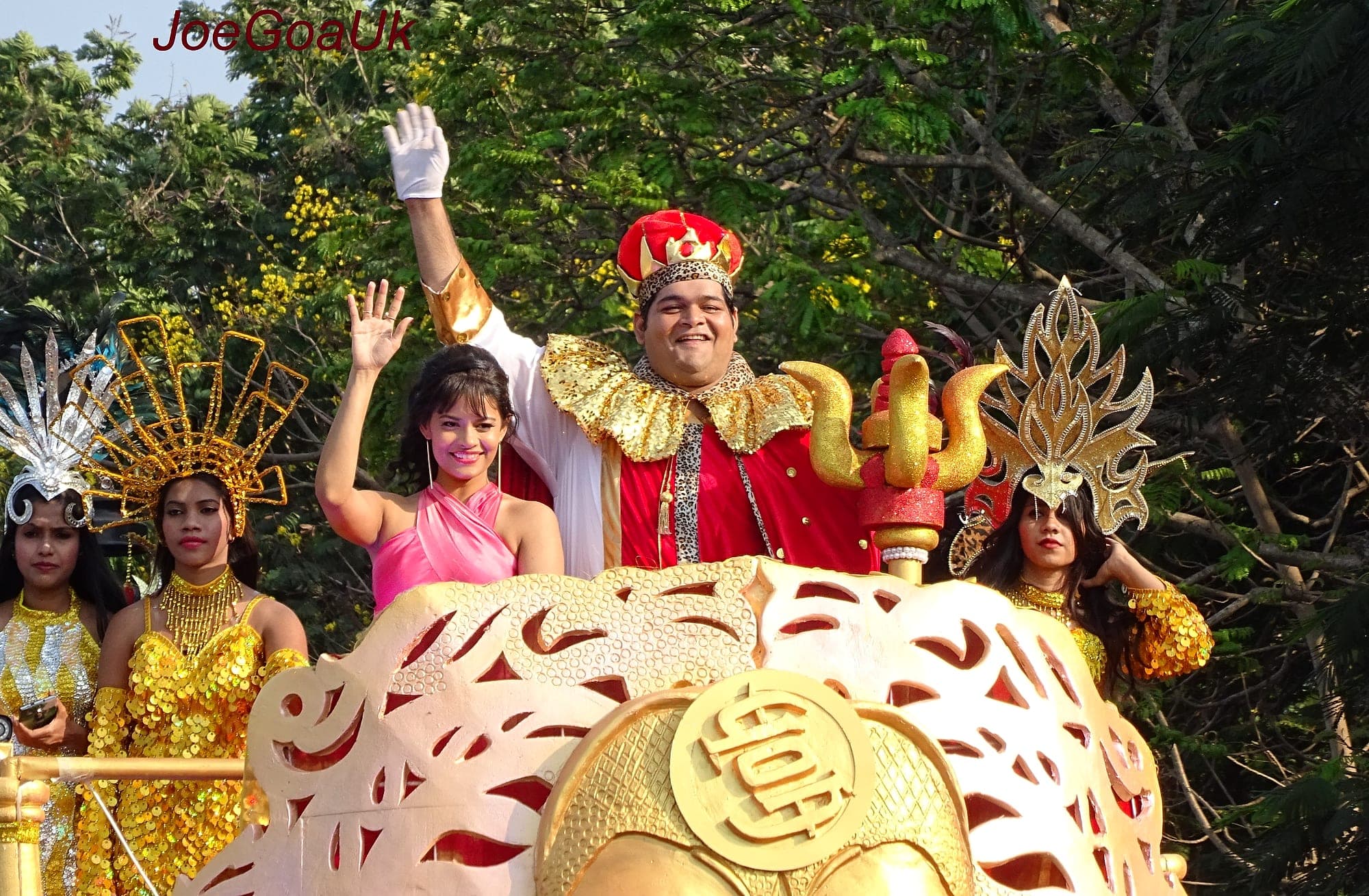
The Carnival opens with the arrival of King Momo — a costumed, crowned figure (traditionally a locally chosen "king of chaos") who parades through the streets proclaiming three days of feasting and revelry, a tradition understood to be modeled on Rio de Janeiro's Carnival opening rituals. Elaborately decorated floats move through Panaji, Margao, Vasco, and Mapusa over several days, accompanied by live music, dance troupes, and street parties, with the event closing as Lent begins — after which the city's tone shifts sharply toward the more subdued Catholic Lenten season.
Quick Facts
- The three to four days before Ash Wednesday, typically February–March
- Panaji, Margao, Vasco da Gama, and Mapusa
- King Momo, a costumed "king of chaos" who proclaims the start of celebrations
- Portuguese colonial tradition, predating Goa's 1961 integration into India
- The only large-scale Carnival celebration in India