Photo: Prashant Kharote / CC BY-SA 4.0
Puri Rath Yatra
Lord Jagannath's annual chariot procession through Puri — the origin of the English word "juggernaut," and one of the largest single-day gatherings in the world.
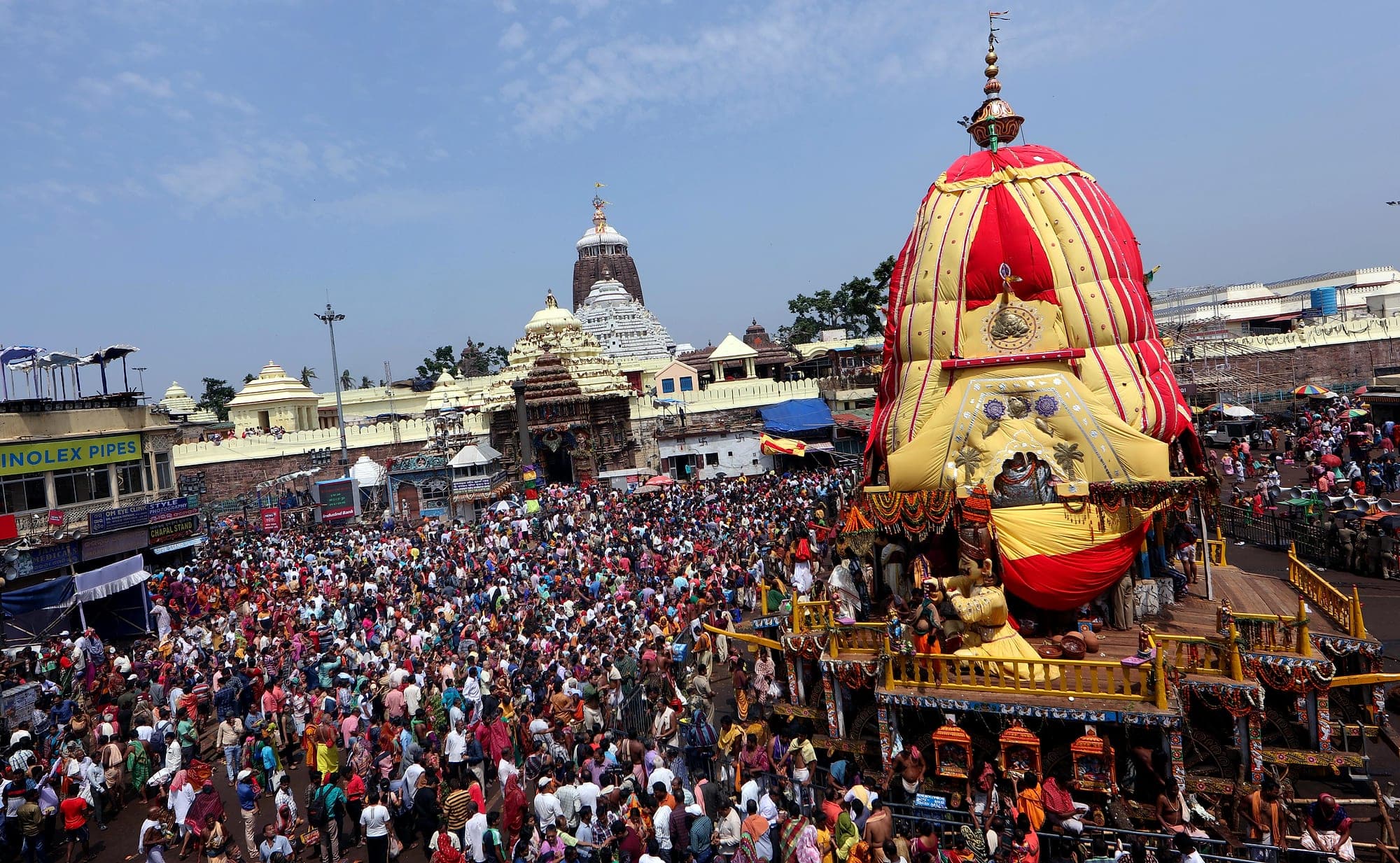
Puri's Rath Yatra is where the English language got the word "juggernaut" — a 19th-century colonial-era corruption of "Jagannath," coined by British observers describing the sheer, unstoppable scale of the deity's chariot moving through crowds. The festival it describes is still one of the largest annual religious gatherings anywhere in the world.
History & Mythology
The Rath Yatra centers on Jagannath — a form of Krishna/Vishnu worshipped in a distinctively simple, almost abstract wooden idol form unique to Odisha — alongside his siblings Balabhadra and Subhadra. Once a year, all three deities leave the sanctum of the Jagannath Temple, Puri (one of Hinduism's Char Dham sites) and travel roughly 3 km to the Gundicha Temple, said to represent their aunt's house, where they stay for about a week before returning — a rare instance in Hindu temple worship where the deities themselves physically leave and re-enter the public world, rather than remaining permanently enshrined.
What Happens
Three massive wooden chariots — rebuilt from scratch every single year following exact traditional measurements and specifications, never reused — are pulled by thousands of pilgrims along Puri's Grand Road, with lakhs of devotees converging on the town for the event. Historically the ritual was open to devotees of every caste, a genuinely significant social feature at the time it developed, since Jagannath Temple's inner sanctum otherwise maintained restrictions the open street procession did not.
Quick Facts
- Ashadha month of the Hindu calendar, typically June or July
- Puri, Odisha — from Jagannath Temple to Gundicha Temple, ~3 km
- Three, rebuilt annually from fresh wood, never reused
- Origin of the English word "juggernaut"
- Among the largest annual religious gatherings in the world