Photo: VIJAY KRISHNA K S / CC BY-SA 4.0
Theyyam
A ritual performance where the dancer isn't representing a deity — by local belief, they become one, in a tradition many scholars trace back over 1,500 years.
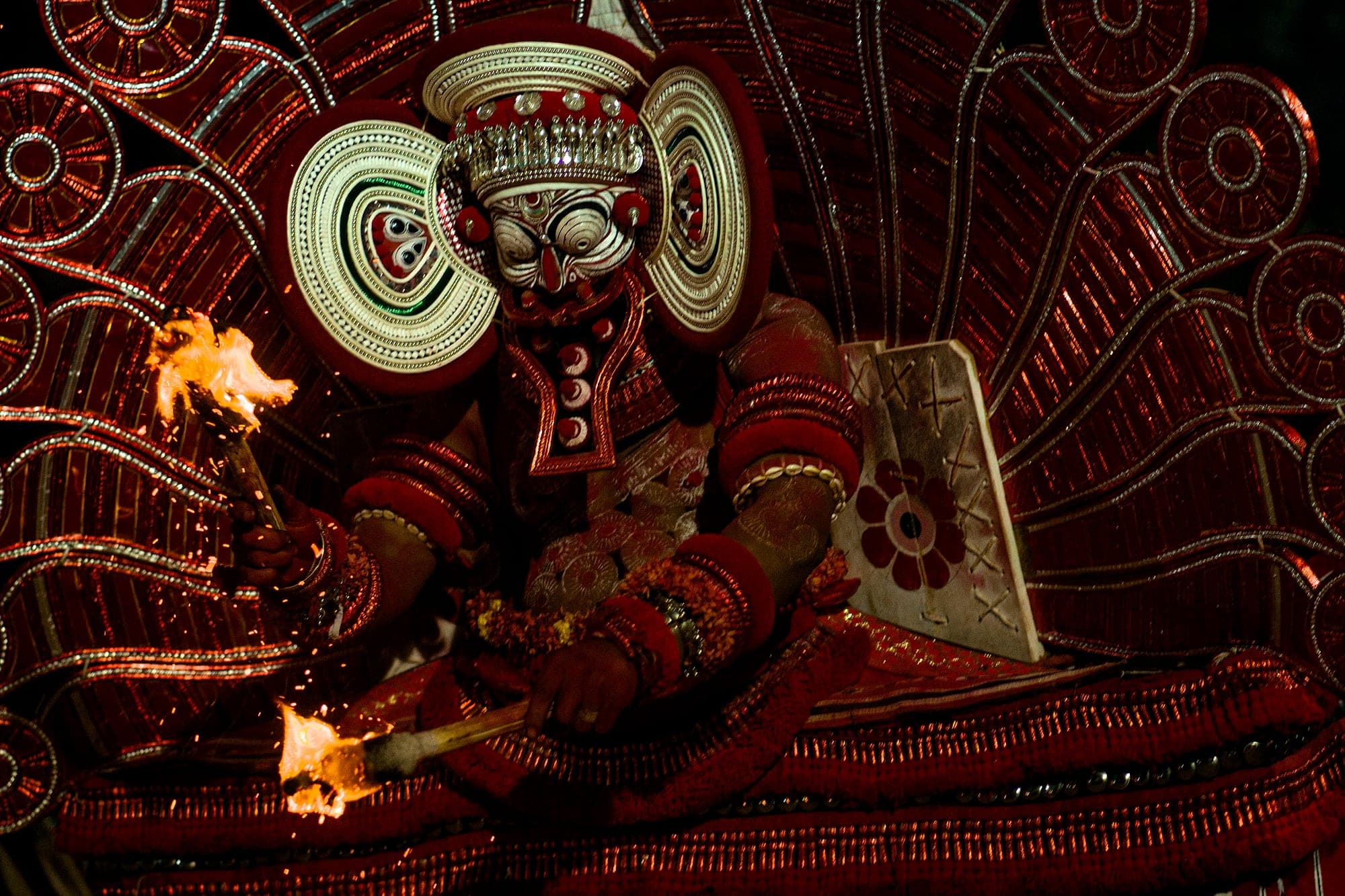
Theyyam is often introduced to outsiders as a "dance form," which understates what's actually happening. In the belief system it comes from, the performer doesn't portray a deity — for the duration of the ritual, they are understood to be possessed by one, and are treated, addressed, and worshipped accordingly by the surrounding community.
History & Significance
Practiced across North Malabar — the Kannur and Kasaragod districts of Kerala — Theyyam is believed by scholars to have roots stretching back over 1,500 years, predating many of the more institutionalized Hindu temple traditions that developed later in the region, and carrying strong pre-Brahminical, folk-religious elements even after centuries of partial integration into mainstream Hindu ritual practice. There are reportedly several hundred distinct Theyyam forms, each tied to a specific deity, ancestor-spirit, or local hero, with the choice of which Theyyam is performed determined by the particular shrine (kavu) and community tradition.
What Happens
A performer — always male, even for female deity forms, and traditionally drawn from specific lower-caste communities to whom the ritual role is hereditary — undergoes hours of elaborate makeup and costuming, often including towering headdresses, before entering a trance state accompanied by drumming. Once "possessed," the performer delivers blessings, answers questions from the assembled community, and is treated with the same deference given to the deity itself — an inversion of caste hierarchy for the ritual's duration that scholars regard as one of the tradition's more socially significant aspects.
Quick Facts
- Season runs November to May, with individual shrine festivals on specific dates
- Kavus (sacred groves/shrines) across Kannur and Kasaragod districts, North Kerala
- Several hundred documented, each tied to a specific deity or spirit
- Traditionally hereditary, drawn from specific community lineages
- The performer is considered possessed by the deity, not merely representing it